


Wolf Distribution Worldwide
The wolf was distributed throughout the Northern Hemisphere, except for North Africa, living in different habitats: the icy zones of Alaska, the tundra of Siberia, the forests of North America and Eurasia, and the semi‑desert regions of Arabia.
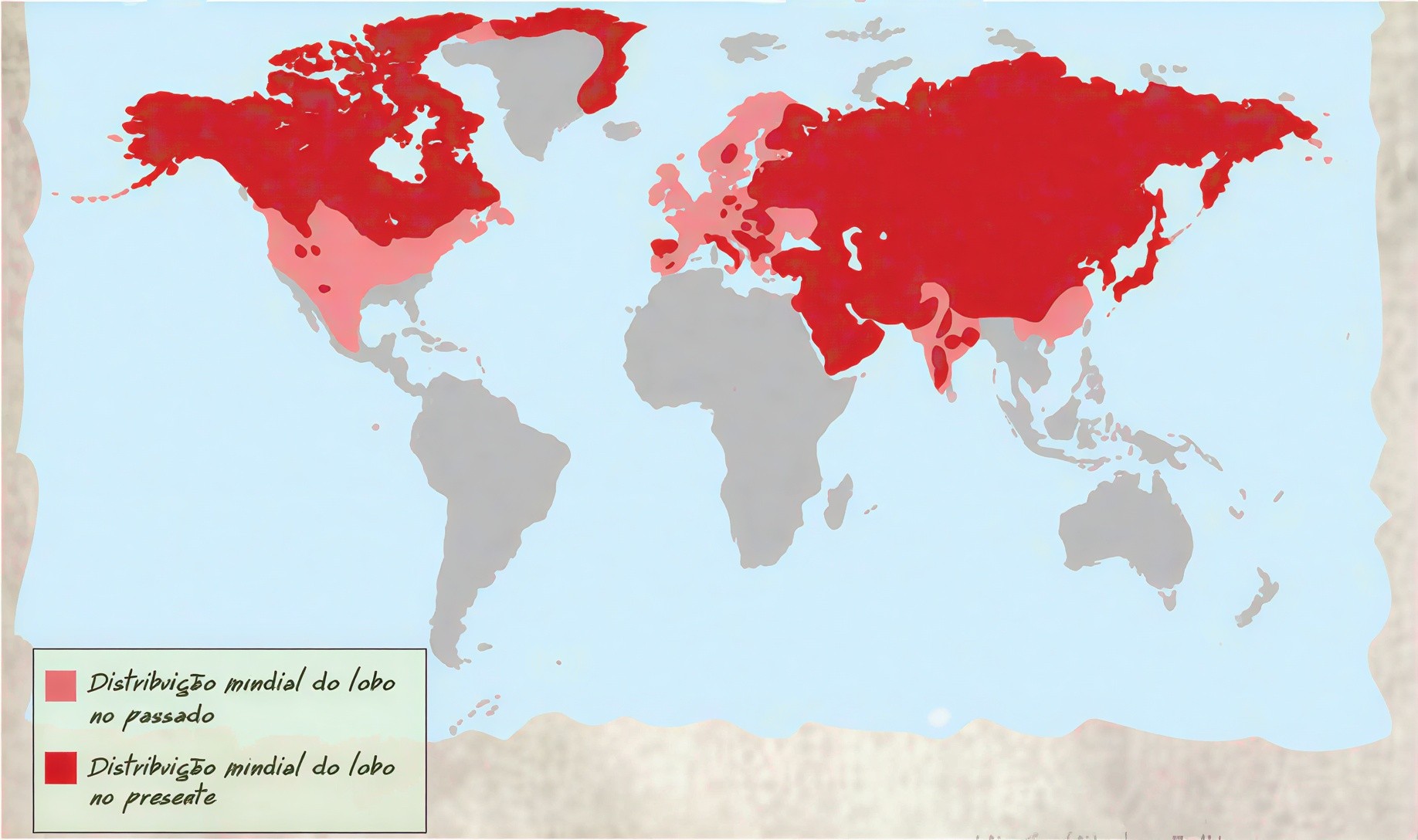
Currently, their distribution area is greatly reduced. In Europe, wolf populations are generally fragmented into small groups, with the largest populations in Eastern European countries. A significant decrease in wolf populations has also been observed in North and Central America.
In recent years, in Central Europe, the wolf population has increased in number and distribution area, recolonizing areas from which it had disappeared. Wolves from Eastern countries have expanded westward (Germany and the Czech Republic), and wolves from Italy have migrated northward (Switzerland, Austria, and France).
This situation results from changing public attitudes towards wolves and altered human occupation of their territory.
Also in the eastern United States, in the border regions with Canada, there is currently an expansion of the species.
The last worldwide census, conducted in 1998, indicates the presence of wolves in 43 countries: in 83% of these, the number of wolves is stable or tending to increase, and in 17%, the number of wolves is decreasing.