


Livestock Guardian Dog
Breeds
Effectiveness
Advantages and Challenges
Livestock guardian dogs have been used by shepherds for hundreds of years and are part of the traditional herding system used in Portugal and other Mediterranean and Asian countries. As a method of protection, the livestock guardian dog stands out for its ancestral use and ability to adapt to different herding situations and traditional livestock management, making it a widely used method.
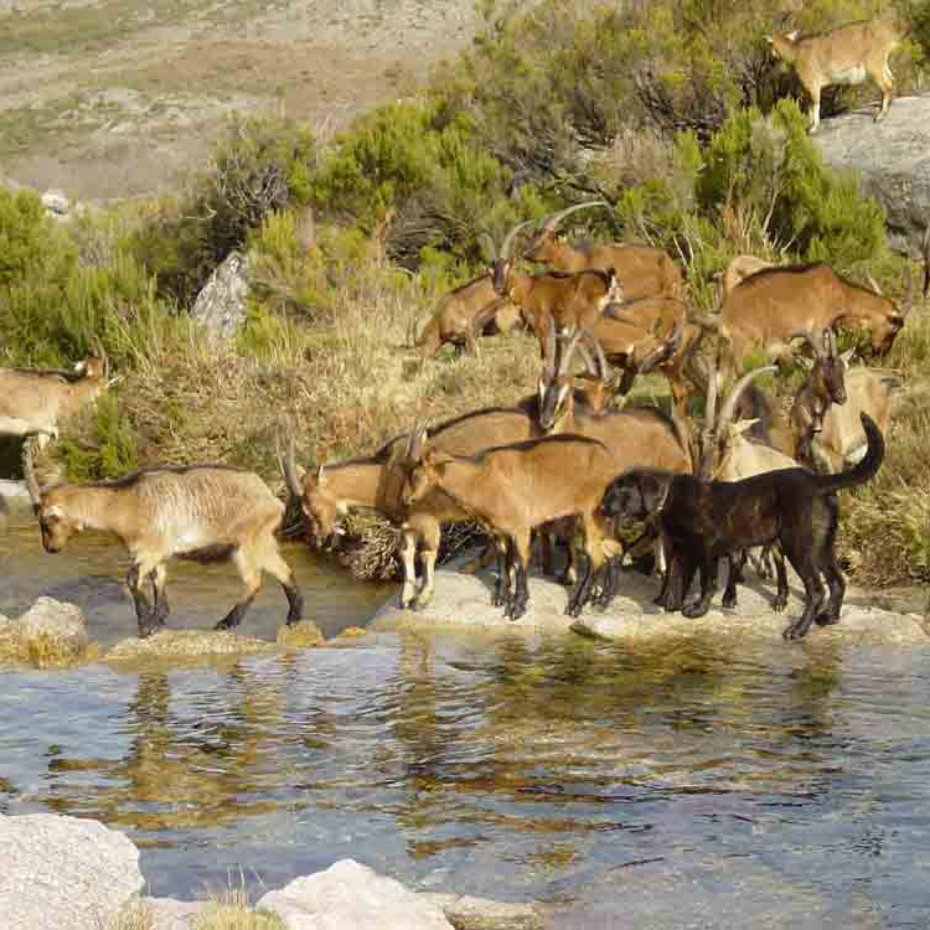
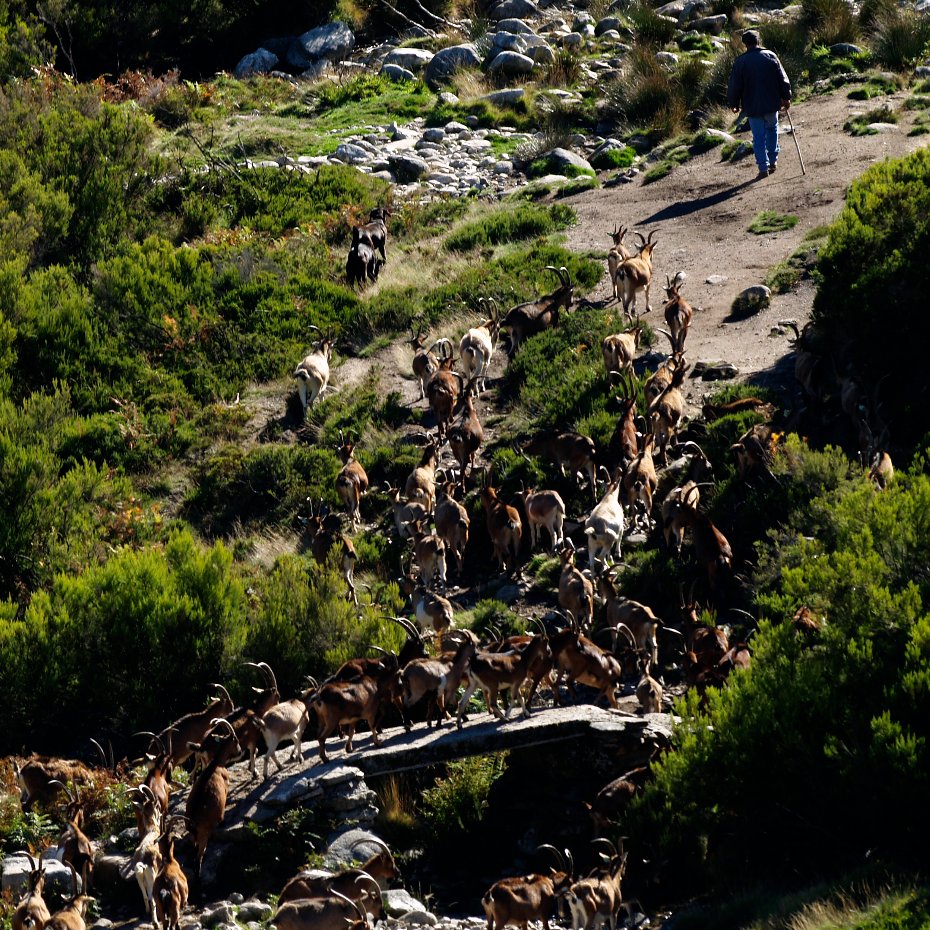
Throughout Mediterranean Europe, where livestock production acquired great economic importance, livestock guardian dogs could be found accompanying herds during their daily grazing journeys or during summer transhumant migrations in search of better pastures. These seasonal migrations, which could cover hundreds of kilometers and last several months, involved the movement of thousands of animals along established routes that crossed countries from North to South, even crossing borders.
Livestock dogs possess a characteristic morphology and behavior that makes them very efficient in protecting domestic animals from predator attacks. These characteristics resulted from behavioral selection carried out by humans over thousands of years.
Origin
Livestock dogs are probably the most numerous type of dog and are likely among the first working dogs selected by humans (Coppinger & Coppinger, 2001). The vast majority of archaeological dog remains have been found in the Middle East, where the domestication of all major livestock species occurred, and they are frequently associated with agricultural human communities (Clutton‑Brock, 1999). These dogs would later have accompanied human migrations, spreading throughout Europe (Coppinger & Coppinger, 2001).
Function
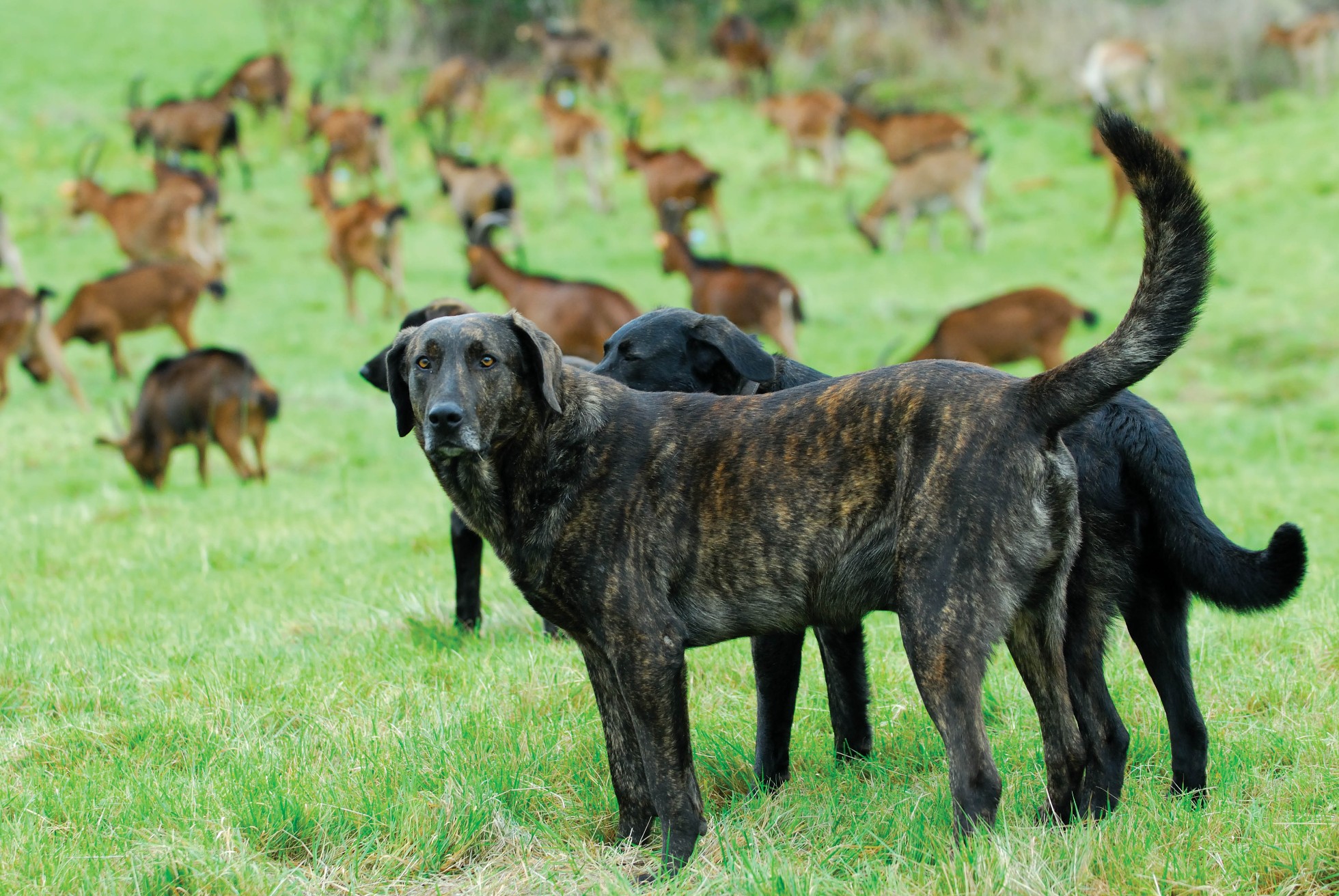
Livestock dogs work independently of the shepherd, accompanying the livestock as they move around and remaining in their vicinity at all times, but without disturbing their activity.
Unlike livestock dogs, herding dogs, also known as driving dogs or shepherd dogs, obey the shepherd's commands, helping to regroup and drive the livestock from one place to another, chasing or barking at the animals. Herding dogs work according to the shepherd's instructions and are generally not left alone with the livestock. They are usually small to medium‑sized dogs and therefore very agile. The two types of dogs have very different functions and can be used together in the same flock.
Due to a decline in interest in herding, the use of livestock guardian dogs has decreased over the last few decades, leading to the near extinction of many breeds. More recently, there has been an increase in interest in national dog breeds, resulting in greater demand for these dogs as companions.
However, this situation can bring some problems, since the selection exercised on animals destined for herd protection is different from that imposed on animals destined for companionship. These are selected based on morphological and behavioral patterns generally different from those required for working animals, with the risk of losing important behavioral patterns that were at the origin of livestock guardian dog breeds (Willis, 1995).
Behavior
The efficiency of a livestock dog depends on its adult behavior, which in turn depends on the emergence of certain behavioral patterns. These behavioral patterns are dependent on the establishment of social relationships with the animals in the herd, which occurs during the Socialization Period.
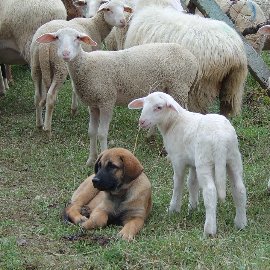
Socialization
Although the socialization process can occur throughout a dog's life, it is during the Socialization Period that social relationships with other individuals (even those belonging to other species) are established more easily. This period, which roughly lasts between 2 and 4 months of age, is the most important in the dog's behavioral development, since the experiences to which the puppy is subjected at this time will have lasting effects on its behavior (Scott & Fuller, 1965; Coppinger & Coppinger, 2001).
These experiences will define its social preferences and the social group with which it will identify. It is at this stage that livestock guardian dogs learn attention behavior and begin to direct the typical behavioral patterns of dogs (which they would normally exhibit towards other dogs) towards the animals in the herd (Coppinger & Schneider, 1995). This is achieved by conditioning the social environment in which the puppies develop, limiting contact only to livestock.
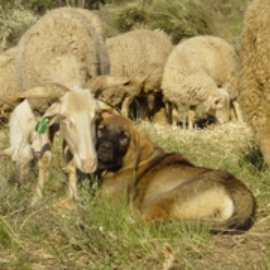
Behavioral Components
According to the model proposed by Coppinger & Coppinger (1980) for livestock dogs, used in several studies on the development and behavioral assessment of these dogs, three behavioral components can be defined: i) Attention; ii) Trust; and iii) Protection.
- Attention: this relates to the socialization of the dog with the animals in the herd, implying the establishment of social bonds between them. An attentive livestock dog is one that stays close to the herd, accompanying it in its movements.
- Trust: refers to the absence of predatory or playful behavior on the part of the dog towards the animals in the herd. Behaviors that disrupt the herd's activity or that lead to injury and/or death of the animals should be prevented, with the most appropriate behaviors being those of submission and investigation.
- Protection: the dog's ability to react appropriately to unfamiliar situations and to interrupt a potential attack, derived from the above. It can be manifested through various behaviors, aggressive or not, that cause the predator to move away from the flock.
Of the three behavioral components, Attention seems to best translate a dog's efficiency in reducing predation. This is a fundamental behavior in the success of the livestock guardian dog, since the dog will only be efficient if it is near the animals it is supposed to protect (Lorenz & Coppinger, 1986).
Furthermore, there is a direct correlation between attention and reduced predation (Lorenz & Coppinger, 1986). Several authors even suggest that a dog does not need to be aggressive towards predators to be effective in protecting livestock (e.g., Coppinger et al ., 1988; Green & Woodruff, 1993).
Attention is therefore a very useful behavioral component, since it is easily observable, and it is not necessary to observe interactions with the predator or even the occurrence of attacks on the flock in order to make an assessment of the dogs.
Morphology
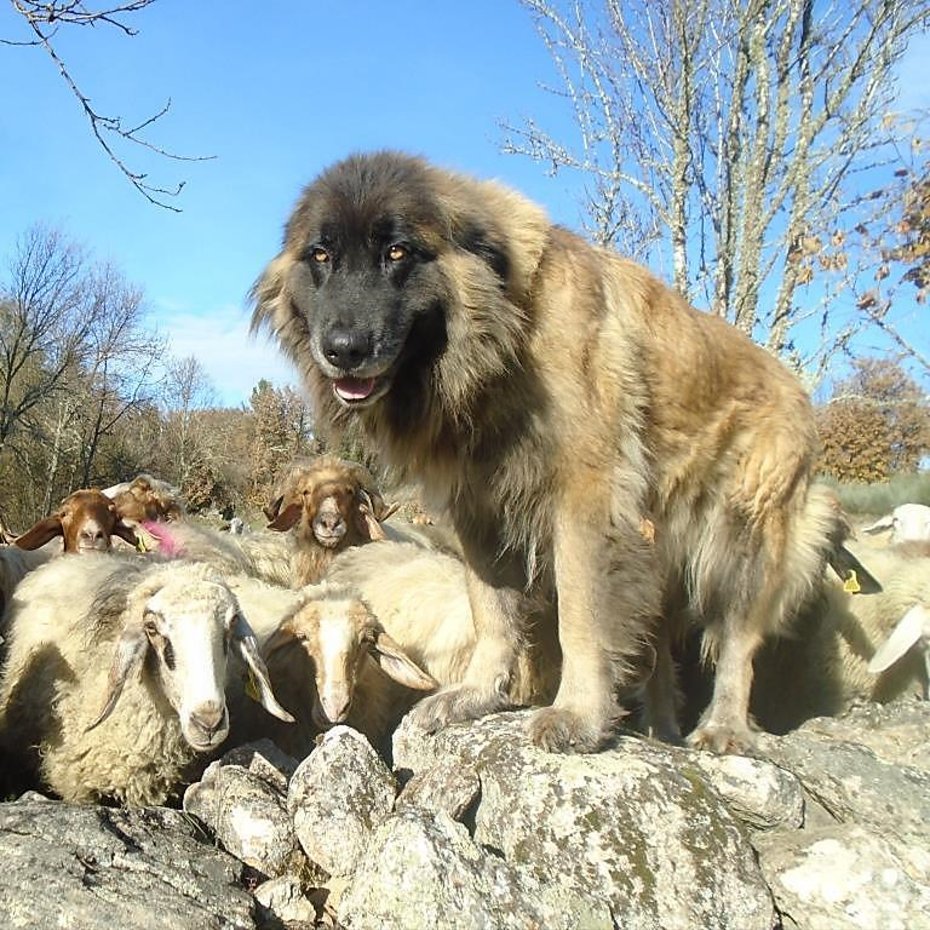
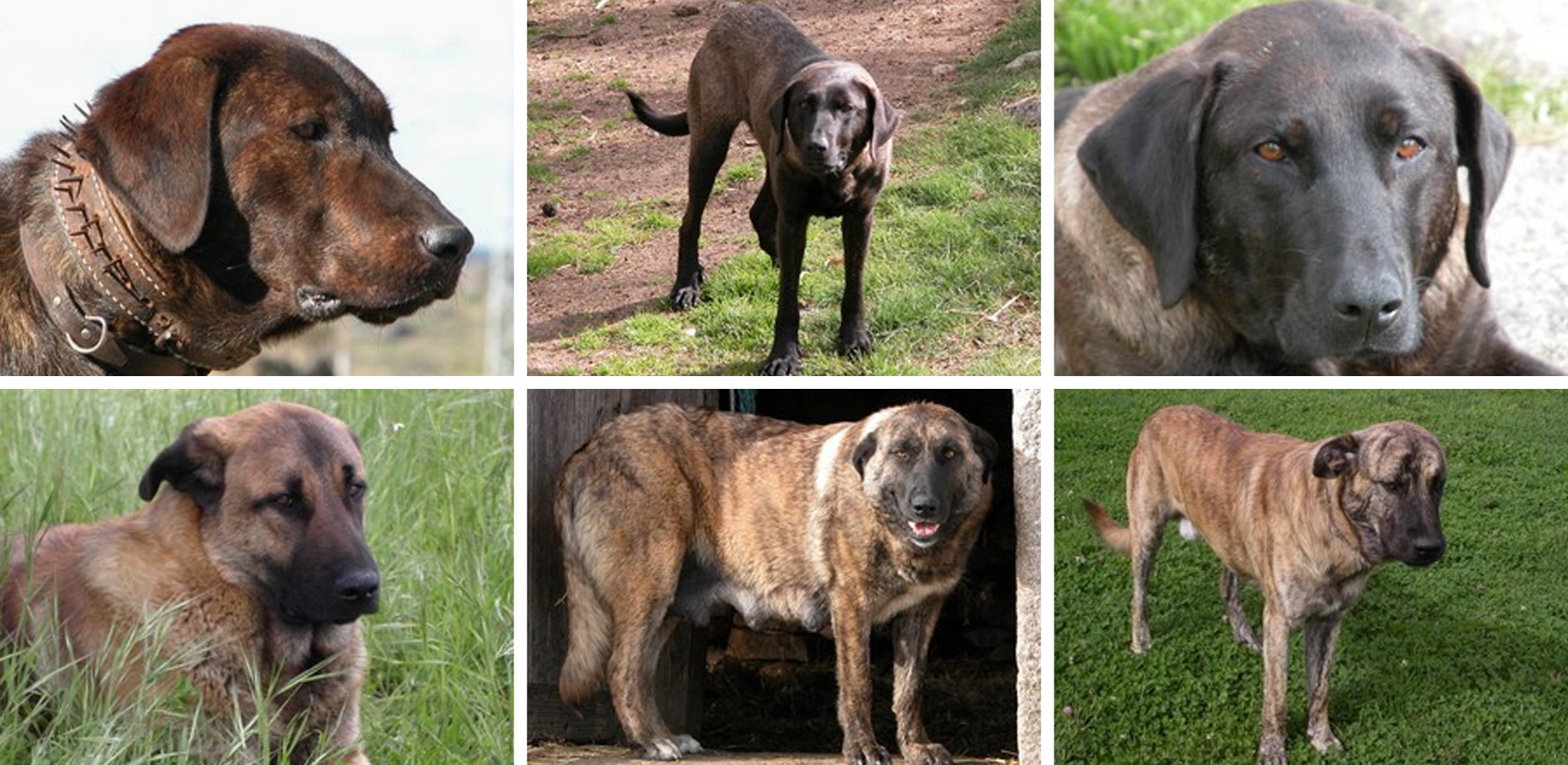
Despite the large number of existing livestock dog breeds, they share a great deal of morphological similarity. They are generally large dogs, with massive, rounded heads and flat ears (falling close to the head). The coat seems to be the main factor that allows the distinction between the various breeds, being either short or long, and presenting a whole range of colors, varying from white to black, a result of the regional preferences of the shepherds.
Bibliography
The following bibliography list refers to the bibliographic references made in the texts and constitutes a selection of the main recommended bibliography.
- Andelt, W. (1992). Effectiveness of livestock guarding dogs for reducing predation on domestic sheep. Wildlife Society Bulletin, 20: 55-62.
- Clutton-Brock, J. (1999). A natural history of domesticated mammals (2nd Ed.). Cambridge: Cambridge University Press / The Natural History Museum.
- Coppinger, R. & L. Coppinger (2001). Dogs: A new understanding of canine origin, behaviour and evolution. Chicago: University of Chicago Press.
- Coppinger, R., J. Lorenz, J. Glendinnig & P. Pinardi (1983). Attentiveness of guarding dogs for reducing predation on domestic sheep. Journal of Range Management, 36: 275-279.
- Coppinger, R., L. Coppinger, G. Langeloh & L. Gettler (1988). A decade of use of livestock guarding dogs. In Crabb, A.C. & R. E. Marsh (Eds.), Proceedings Vertebrate Pest Conference (pp. 209-214). Davis: University of California.
- Coppinger, R. & R. Schneider (1995). Evolution of working dogs. In J. Serpell (Ed.), The Domestic Dog: its evolution, behaviour and interactions with people (pp. 21-47). Cambridge: Cambridge University Press.
- Green, J.S. & R.A. Woodruff (1990). ADC guarding dog program update: a focus on managing dogs. In L.R Davis & R.E. Marsh (Eds.), Proceedings 14 th Vertebrate Pest Conference (pp. 233-236). Davis: University of California.
- Green, J.S. & R.A. Woodruff (1993). Livestock Guarding Dogs. Protecting sheep form predators. Agriculture Information Bulletin Nr 588. United States Department of Agriculture, Animal and Plant Health Inspection Service.
- Green, J.S., R.A. Woodruff & W.F. Andelt (1994). Do livestock guarding dogs loose their effectiveness over time? In W.S Halverson & A.C. Crabb (Eds.), Proceedings 16 th Vertebrate Pest Conference (pp. 41-44). Davis: University of California.
- Green, J.S., R.A. Woodruff & T.T. Teller (1984). Livestock-guarding dogs for predator control: costs, benefits and practicality. Wildlife Society Bulletin, 12: 44-50.
- Lorenz, J.R. & L. Coppinger (1986). Raising and training a livestock-guarding dog. Extension Circular 1238. Oregan State University Extension Service.
- Lorenz, J.R., R.P. Coppinger & M.R. Sutherland (1986). Causes and economic effects of mortality in livestock guarding dogs. Journal of Range Management, 39: 293-295.
- Ribeiro, S. & F. Petrucci-Fonseca (2005). The Use of Livestock Guarding Dogs in Portugal. Carnivore Damage Prevention News, 9 (December): 27-33.
- Scott, J.P. & J.L. Fuller (1965). Genetics and the social behavior of the dog. Chicago: University of Chicago Press.
- Willis, M. (1995). Genetic aspects of dog behaviour with particular reference to working ability. In J. Serpell (Ed.), The Domestic Dog: its evolution, behaviour and interactions with people (pp. 52-64). Cambridge: Cambridge University Press.