


Encounters with Livestock Guardian Dogs
Livestock guardian dogs are integral elements of our rural and mountain landscapes, traditionally selected and used to protect domestic animals from predator attacks, such as wolves. With the increase in sports and nature tourism, the likelihood of encounters with these dogs, which daily accompany flocks and herds during grazing, tends to increase. In order to respect their behavior, work, and important function, there are a number of basic rules of conduct that should be followed so that any encounter with livestock and their dogs occurs peacefully.
Remember that cattle have always grazed daily in the mountains, and the dogs are simply doing their job, protecting them from potential dangers such as predator attacks. Respecting the way livestock guardian dogs work helps avoid unnecessary incidents and facilitates their important function.
Basic rules of conduct
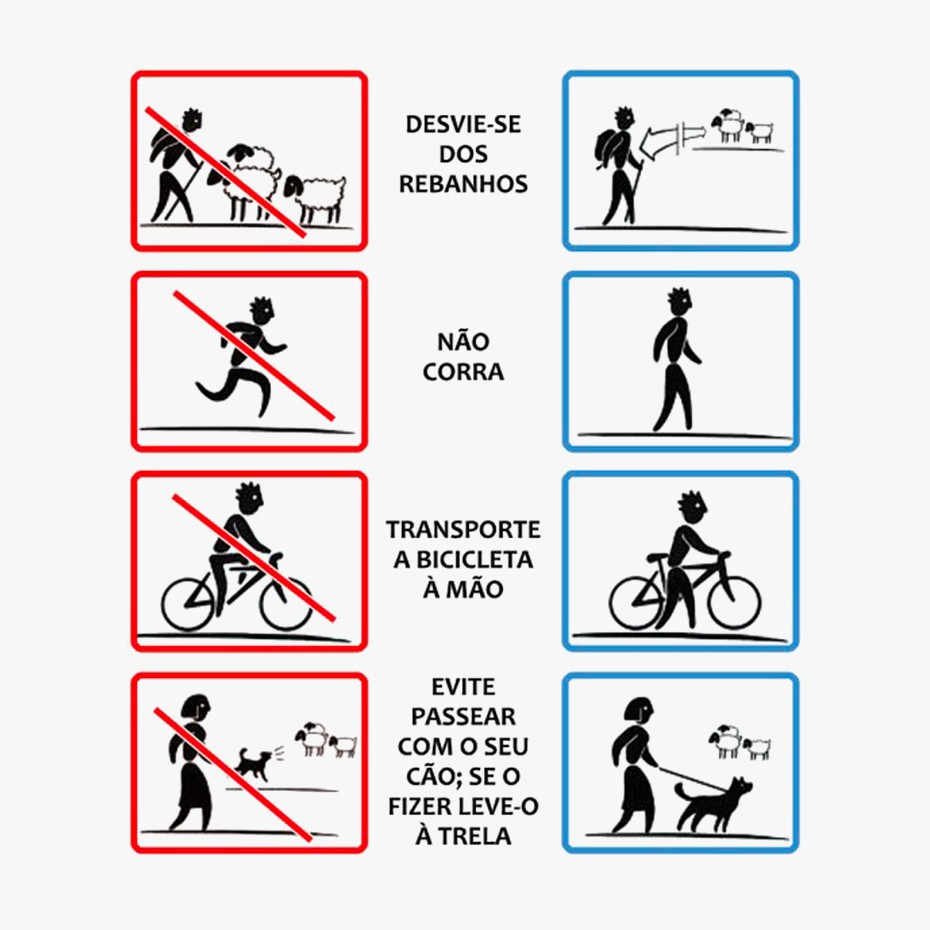
- Keep a safe distance;
- Do not disturb and respect the animals;
- Do not threaten or throw objects at the dogs, nor feed them;
- Don't run, and if you're walking, slow down;
- If you are cycling, get off and carry the bike by hand;
- Avoid walking your pets; if you do, keep them on a leash;
- If in doubt or afraid, go around the herd or retreat.
Get to know these dogs better and learn more about:
- Its importance and its behavior;
- How can you contribute to a sustainable sharing of mountain pastures;
- How to behave so as not to disturb the dogs or the livestock.
Help spread awareness of the important work of livestock guardian dogs and how we should behave in their presence by downloading some materials developed in collaboration with ACHLI – the Iberian Wolf Habitat Conservation Association:
Encounters with these dogs are becoming increasingly frequent throughout Europe; see a video on this subject, filmed in the Swiss mountains and produced by AGRIDEA – the Swiss Association for the Development of Agriculture and Rural Areas:
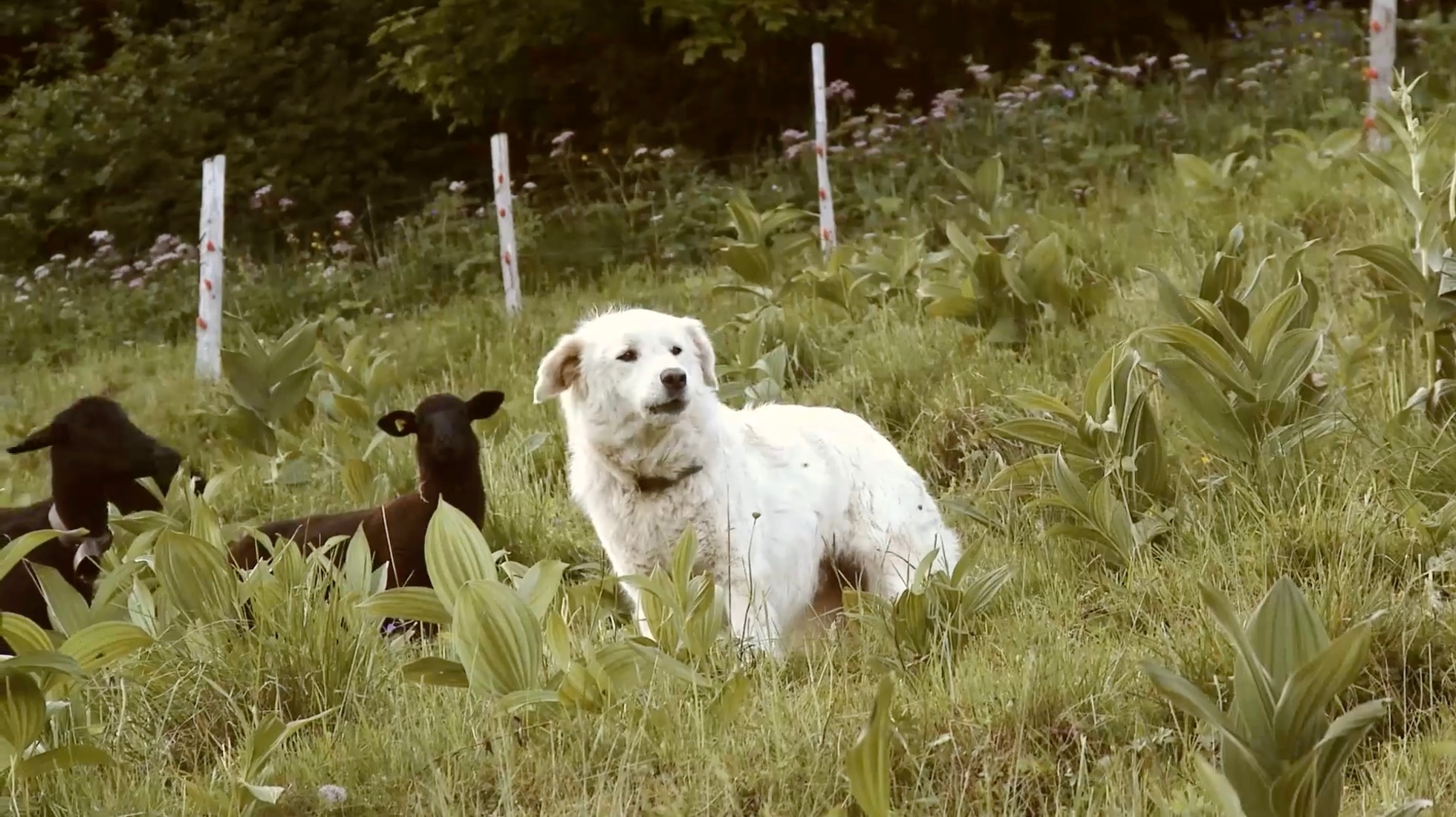
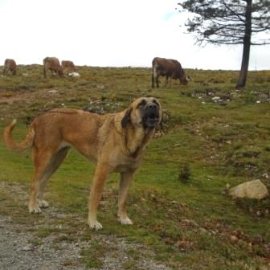
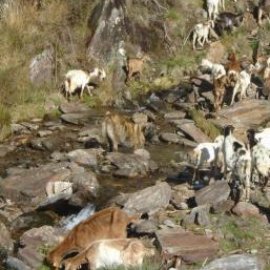
Livestock guardian dogs protect the flocks and herds grazing in the mountains
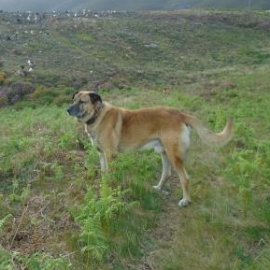
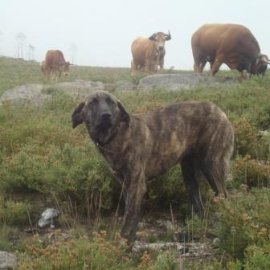
The presence of livestock guardian dogs is essential to protect the flocks and herds grazing in the mountains, helping to reduce attacks from predators, not only wolves, but also stray dogs or foxes. The use of these dogs is part of the traditional livestock protection system used throughout the Mediterranean region, and also in Portugal, where there are four recognized breeds: Castro Laboreiro Dog, Serra da Estrela Dog, Rafeiro do Alentejo, and Transmontano Livestock Guardian Dog. These are large dogs that have been selected over thousands of years for this very specific function, and are therefore an important part of our natural and cultural heritage for thousands of years.
Dogs play an important role, contributing to coexistence with wolves and the conservation of biodiversity
Within the context of biodiversity conservation efforts, particularly concerning the Iberian wolf, livestock guardian dogs play a crucial role. They facilitate the coexistence of extensive grazing with the presence of wolves, reducing persecution of this threatened predator, as well as illegal hunting and the use of poisons that threaten not only the wolf but many other species (e.g., birds of prey, wild ungulates).
They also allow for the maintenance of grazing in rural and mountainous areas, which plays a vital role in landscape and biodiversity preservation, and in fuel management (reducing shrub vegetation areas). Their importance in conserving our native livestock breeds should also be considered.
Understanding and respecting the work of livestock guardian dogs
These dogs are not a danger to people, but they can be intimidating. They work independently and instinctively protect their flock or herd from strangers. They are part of the flock or herd they protect day and night. They are particularly alert and reactive in low light, at night, and when the livestock is moving.
Any walker who approaches will be viewed with suspicion by these dogs, and their first reaction will be to try to keep them as far away from the livestock as possible. Strange dogs can provoke a strong defensive reaction in livestock guardian dogs. Therefore, when walking in areas with protected flocks or herds, you should not be accompanied by your companion dogs.
How to behave in the presence of these dogs
When approaching a flock or herd guarded by livestock guardian dogs, follow these recommendations:
- Do not disturb the animals and avoid surprising and frightening the livestock guardian dogs. If you cannot locate the dogs in the herd or flock, signal your presence by speaking loudly. Remain calm and avoid sudden movements. Threatening the dog by waving a stick in the air and shouting will be understood as a threat. Never attempt to pet or feed the dogs.
- Keep your distance from the flock or herd. Once the dogs accept your presence and stop barking, you can continue on your way peacefully.
- If the guard dogs bark, run towards you, and block your path, remain calm and give them time to assess the situation. If necessary, sticks can help keep the dogs away by angled towards the ground in the direction of the dogs.
- If you feel threatened by a livestock guardian dog, avoid looking it in the eyes and never turn your back on it. Slowly back away and lower any sticks or poles you have with you. When you are far enough away from the flock or herd, the dogs will leave you alone. Then circle around the flock or herd or retreat.
- If the flock or herd guard dogs do not calm down, even if you wait calmly, move away from the flock or herd.
- Don't run, and slow down if you're walking. If you're cycling , get off and carry the bike.
- It is strongly discouraged to go accompanied by companion dogs, but if you accidentally find yourself with your companion dog near or within a protected flock or herd, keep it on a leash and calmly move away, skirting the livestock. If the livestock guardian dog does not calm down after a short period, you should turn back.
- Never attempt to cross a protected herd or flock with your companion dog. Go around the livestock as far away as possible. If you are afraid, turn back.
Keep in mind that thoughtless reactions, especially forcing your way closer to or through the herd or flock despite clear warnings from livestock guardian dogs, can, in the worst-case scenario, lead to the dog biting.
When in doubt, go around the herd or retreat.
The symbols above, which illustrate the basic rules of conduct, were kindly provided by AGRIDEA – The Swiss Association for the Development of Agriculture and Rural Areas.