

Implementation
The methodology used follows a specific sequence, in which the first phase involves selecting the participating livestock breeders and the puppies to be integrated, followed by monitoring the integrated dogs and providing support to the livestock breeder during the dogs' development. Finally, the effectiveness of the adult dogs is evaluated.
Selection of cattle breeders
After an initial selection of herds or flocks, based on the amount of losses resulting from predator attacks, an interview is conducted with the livestock breeder. This interview aims to assess their level of motivation to participate and comply with the given instructions for the proper training of the dogs, as well as the existence of suitable conditions for their integration, namely the safety of the stables (structure and location), the presence of other dogs with the livestock, and the absence of serious mortality risks for the animals to be integrated (poison, roads with heavy traffic).
The type of livestock management, the hygienic and sanitary conditions in which it is kept, and the type of protection in place are recorded to minimize the necessary changes in the livestock breeder's daily routine after the introduction of the puppy, facilitating its training and maintenance. Special importance is given to the livestock breeder's motivation, as it is a very influential factor in the quality of the dogs' training and, consequently, in their performance.
In some situations, it is the livestock breeders themselves who request dogs, after having learned about the effectiveness of the dogs already delivered by Grupo Lobo.
Another aspect considered was the existence, in the flock or herd, or in flocks or herds from the same village or neighboring villages, of other livestock guardian dogs integrated by the Lobo Group team. This allows for the promotion of the formation of pairs of specimens of the same breed and the production of quality puppies, and reinforces the number of existing dogs, maintaining a viable core of specimens of the breed. This will make it possible to promote the effective use and expansion of livestock guardian dogs in the long term.
Upon integration of the dog, livestock breeders receive an explanatory leaflet about the behavior, training, and national breeds of livestock dogs. This leaflet also provides contact information for the entities participating in the program. Another leaflet is also distributed on basic health care and management of livestock dogs, containing other useful information, namely on dog identification and existing legislation.
To ensure compliance with recommendations regarding the training and maintenance of dogs by livestock breeders, and thus enhance the efficiency of integrated dogs, a collaboration protocol is signed between Grupo Lobo and the breeder. This protocol stipulates the responsibilities of both parties, as well as the procedures to be followed for the training, maintenance, and reproduction of the dog.
Dog selection
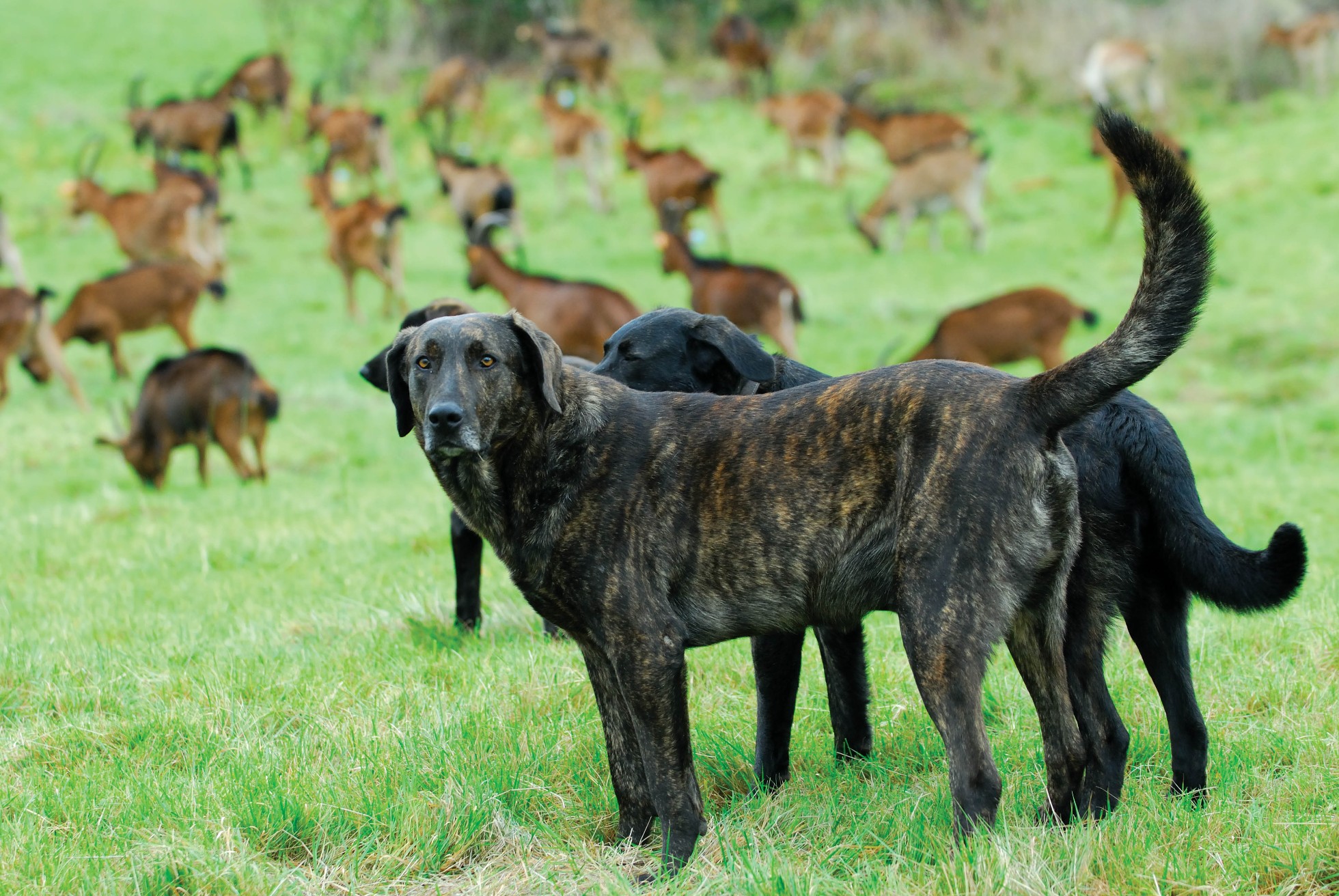
In selecting breeding stock, preference is given to animals still used in their traditional role, as this increases the likelihood of obtaining a good livestock guardian dog. Behavioral information is obtained through a survey of the owner about the dog's behavior in specific situations, aiming to assess different behavioral aspects and, whenever possible, supplemented by observing the dog during the herding period.
The behavioral and morphological preferences of livestock guardian dogs used as companion animals may differ from the behaviors initially selected and fundamental for a breed to be functional. Thus, there is a risk that animals from lineages not used for work for several generations will not exhibit the behaviors suitable for protecting herds (Willis, 1995). Because there are no working trials for livestock guardian dog breeds, their selection is largely guided by the classifications obtained in conformation shows.
After selecting the parents, the litters and puppies are chosen. Generally, only a few puppies are selected per litter, in order to obtain specimens descended from different lineages and thus increase the genetic diversity of the dog populations of both breeds.
The selection of puppies is carried out after weaning (which occurs between 1 and 1.5 months of age) and is based on a physical and behavioral assessment. Puppies in poor physical or health condition, with malformations (e.g., hernias, prognathism) or characteristics that differ from the breed standards should be excluded. Puppies that are not too shy or aggressive should be selected. Aggressive animals may attack other animals or people more easily, and very shy animals will be more difficult to train correctly, with a lower probability of success (Green & Woodruff, 1993).
Selecting puppies is always a delicate process since it is difficult to predict exactly how they will develop. At 1‑2 months, many morphological characteristics are not yet defined, and some behavioral patterns have not yet emerged. Furthermore, it is necessary to consider that behavioral patterns result from the interaction, which occurs during development, between environmental and genetic factors (Coppinger & Coppinger, 2001).
Breeds used
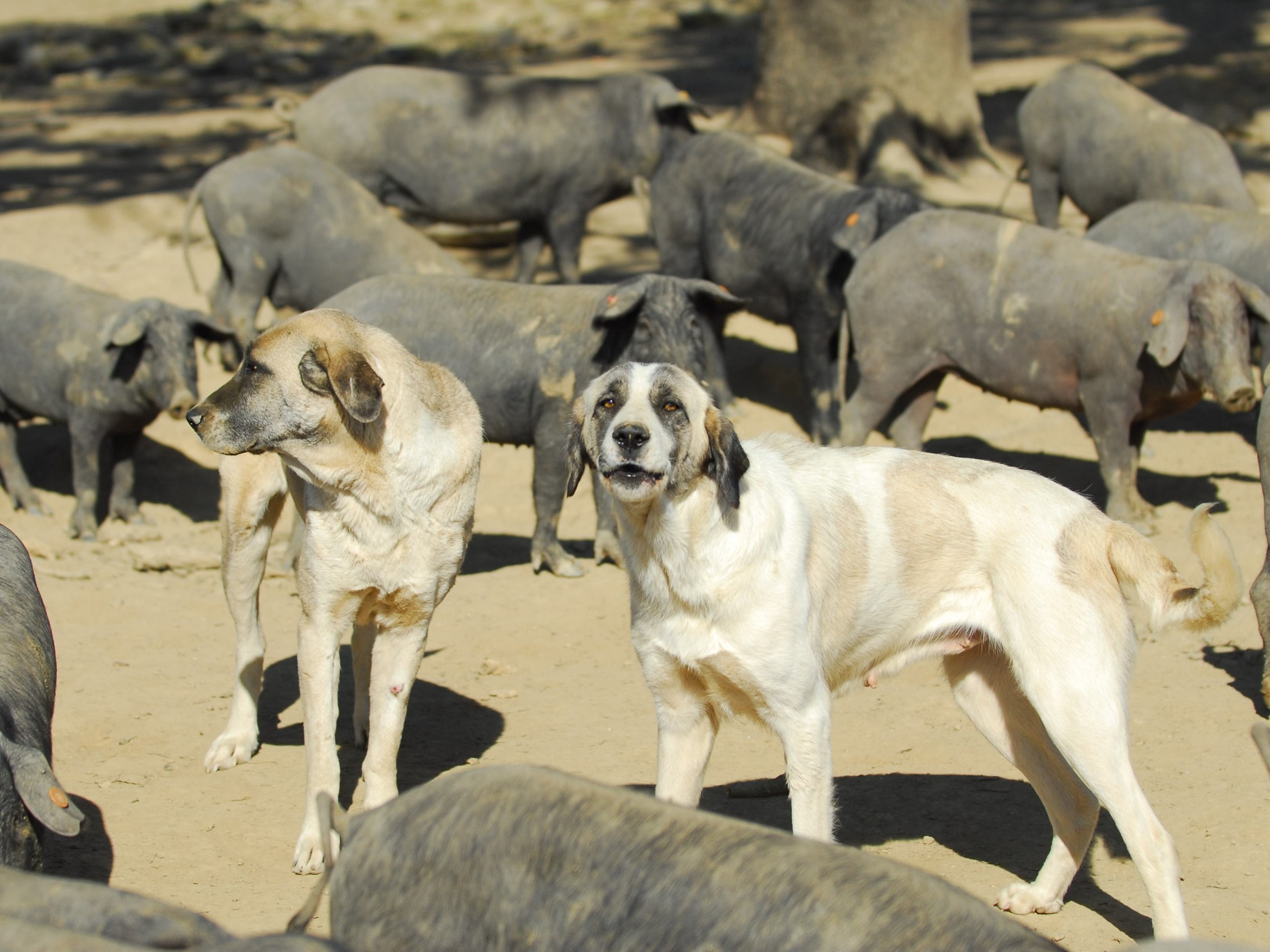
Specimens belonging to 3 national livestock dog breeds were included: the Castro Laboreiro Dog, the Serra da Estrela Dog, in both short‑haired and long‑haired varieties, and the Alentejo Mastiff.
The criteria for integrating specimens of the breeds used seek to respect their historical distribution and the environmental characteristics of their original territories. It also aims to promote the formation of nuclei of the same breed, thus facilitating mating between individuals and counteracting miscegenation, one of the main dangers to their conservation.
The Castro Laboreiro dog breed is integrated into the mountainous regions of the Vila Real district, which has very similar characteristics to the breed's original habitat, namely the environmental conditions and the existing livestock breeds. The Serra da Estrela dog breed is mostly integrated into the Central region of the country, being closer to the breed's original habitat, the Serra da Estrela mountain range. The Rafeiro do Alentejo breed is integrated into the Castelo Branco district, being close to the region where they originated, the Alentejo.
Integration of dogs with livestock
Puppies should be integrated immediately after weaning, but only after they have received their first vaccinations. It is during this phase of their development, called the socialization period, which extends until about 4 months of age, that puppies most easily establish social bonds with other individuals – in this case, the animals in the herd (Coppinger & Schneider, 1995; Coppinger & Coppinger, 2001). This socialization allows the dogs to identify the livestock as their “family,” always accompanying them on their movements and protecting them when necessary.
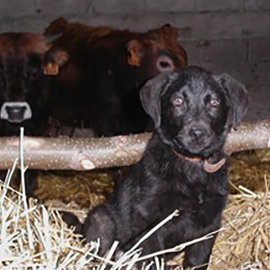
In some situations, it may be necessary to make small adaptations to the stable to create the appropriate conditions for the puppy's integration, namely: covering all places where it can escape and creating a refuge for the puppy, particularly when the animals are more aggressive (more aggressive breeds or animals that are not used to the presence of dogs in the yard or that have recently given birth).
The refuge area is a very simple structure, possibly consisting only of a few boards firmly against the wall in one corner of the stable, allowing the dog to enter and exit easily but not the livestock. The dog's rapid habituation to the animals, learning to avoid aggressive situations, and vice versa, means that after a few days the refuge is no longer used.
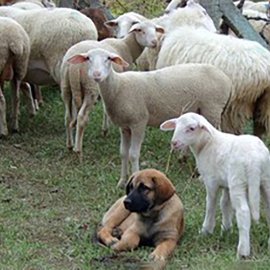
From the moment a puppy is introduced into a herd, it should always be kept with the animals it will protect as an adult. The establishment of social bonds is promoted by mandatory proximity, so the puppy should always be kept in contact with the livestock, without the possibility of escape. The inability to leave not only favors socialization but also minimizes the tendency to run away when the puppy has more freedom (Green & Woodruff, 1993).
Contact with other dogs is discouraged, and interaction with people should be reduced to ensure strong social bonds between the dog and the livestock. However, it is important that the dog has some contact with its owner and family so that it can be safely handled whenever necessary, particularly during veterinary examinations and procedures.
Cattle habituation to the dog
The association between dogs and livestock also requires habituation on the part of the herd animals. It is important to give all members of the herd the opportunity to meet the dog, especially if they are not familiar with the presence of livestock guardian dogs.
Whenever possible, puppies should be placed with younger animals, as the latter are less aggressive than adults and more readily accept the presence of a dog. Furthermore, young animals that grow up in the company of a dog also demonstrate, as adults, social bonds with the dog, facilitating its role as a guardian (Lorenz & Coppinger, 1986).
The dog's first outing with the cattle
Before they begin to herd cattle, puppies should be kept permanently in the stable for a period of habituation that can vary between 2 and 7 weeks, depending on the dog's behavioral development and habituation to the cattle.
This period aims to foster the establishment of social bonds with the animals in the herd and to accustom them to the presence of the dogs, as well as to allow the puppy to reach the physical capacity to be able to accompany the livestock during the entire grazing period.
In areas where predator pressure is high, the dog should only start accompanying livestock later, after 6‑8 months of age, when it has more ability to escape and defend itself.
Monitoring the development
To monitor the physical and behavioral development of the dogs, regular visits (usually monthly) are carried out. During these visits, the dogs are examined, and their physical condition and health status are checked. These examinations are complemented by inquiries to the owner about the dog's health status or the display of abnormal behaviors that may be indicators of illness.
Behavioral observations are also conducted between the dog and the livestock (in the pasture or stable) to assess its behavior. This data is further supplemented by questions to the owner about the dog's behavior in specific situations, allowing for the evaluation of different behavioral aspects.
The information obtained is quite important, especially during the dog's juvenile phase, as any inappropriate behavior should be immediately reprimanded to avoid being reinforced, which would make its correction more difficult.
Nutrition and veterinary care
For dogs to perform well, they need to be in good physical and health condition. In addition to veterinary care, it's important to feed a dog food that is appropriate for its age, physiological state, and the level of exertion it requires.
All dogs delivered are provided with appropriate nutrition (dog food) during their growth phase and until they reach maturity. Dogs should always be fed in the stable, which helps them associate this place and the presence of livestock with positive stimuli. To prevent food from being consumed by the herd, the feeding trough should be placed in a location inaccessible to livestock, specifically in the refuge area built for the puppy, with water placed in an area common to the livestock.
Veterinary recommendations are also followed regarding veterinary prophylaxis, namely primary vaccination of puppies and annual vaccination of adult dogs, as well as internal and external deworming. If possible, all other veterinary care is also provided to the dogs surrendered until they are 2 years old.