

Breeds
Throughout Mediterranean Europe and Asia, there are approximately 30 recognized breeds of livestock guardian dogs. This diversity results from selective breeding based not only on the animals' ability to adapt to the characteristics of each region, but also on regional aesthetic preferences.
In Portugal, four breeds are recognized by the Portuguese Kennel Club:
- Castro Laboreiro Dog;
- Serra da Estrela Dog, in both short‑haired and long‑haired varieties;
- Rafeiro do Alentejo;
- Transmontano Cattle Dog.
Castro Laboreiro Dog
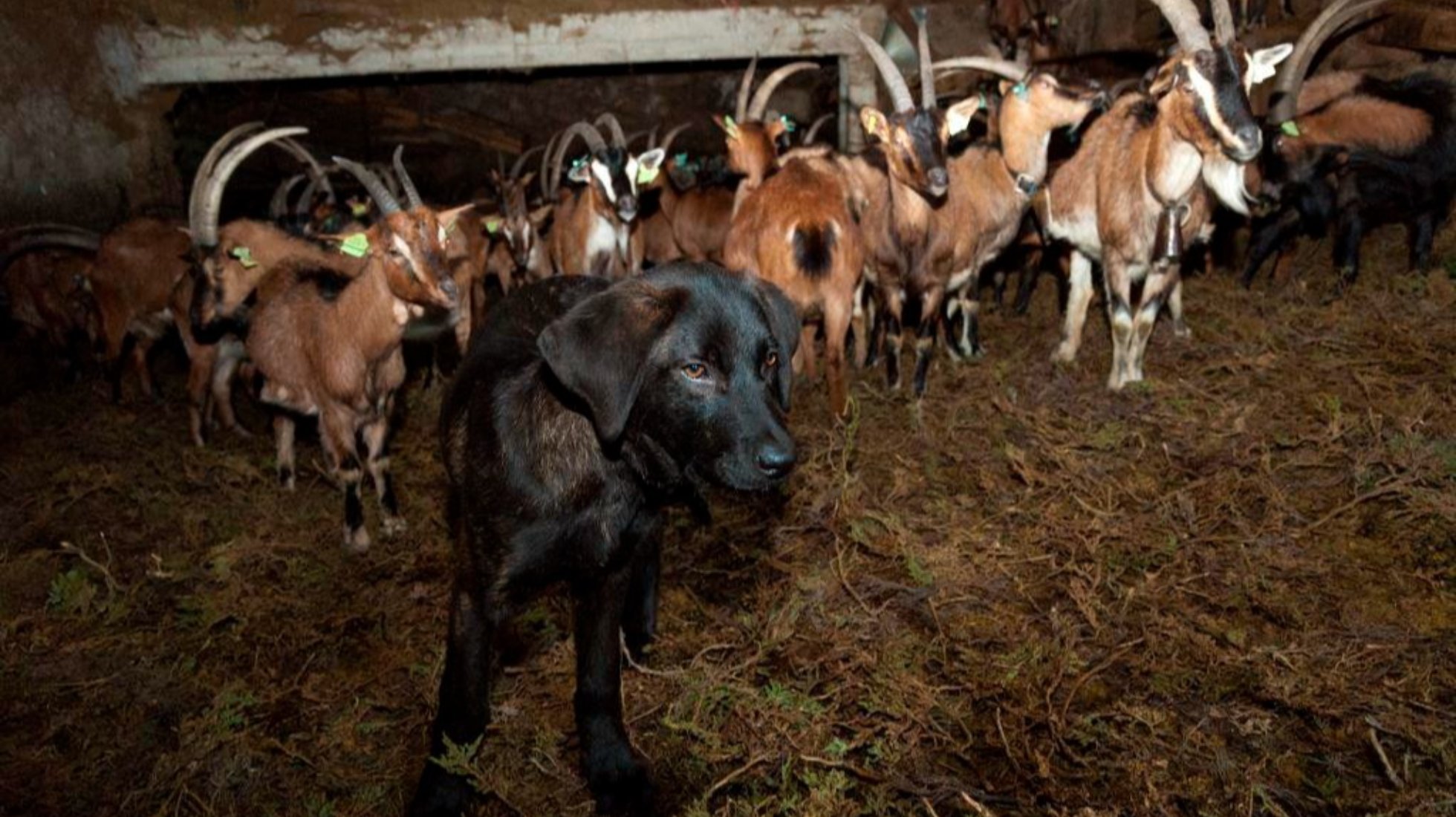
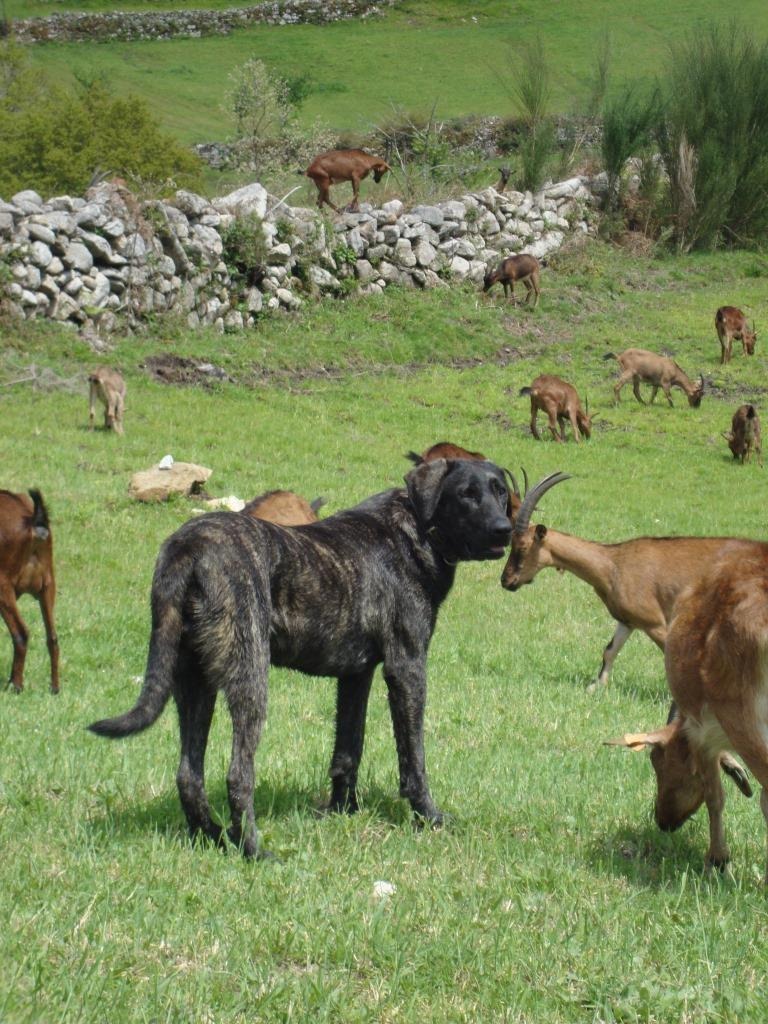
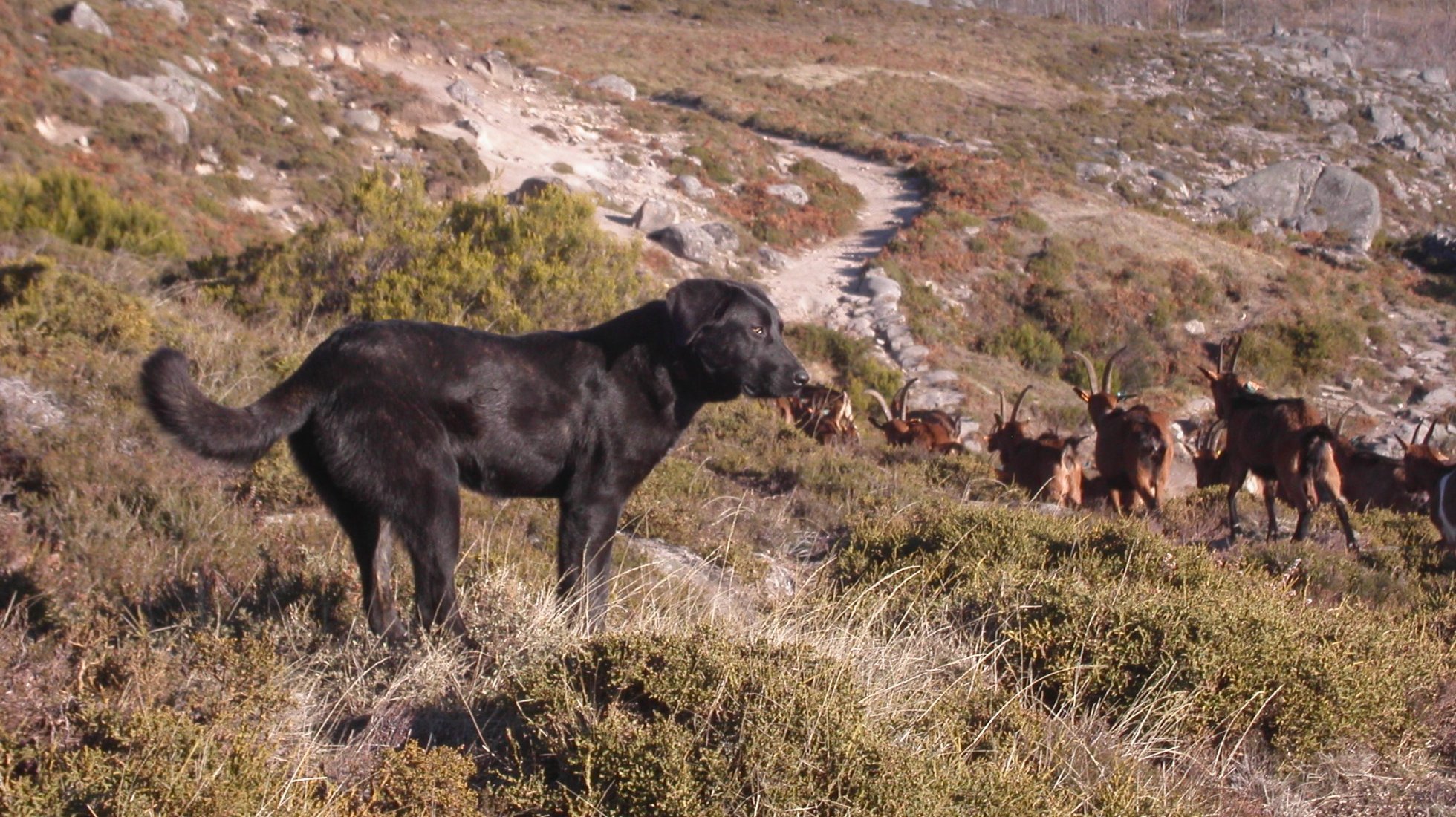
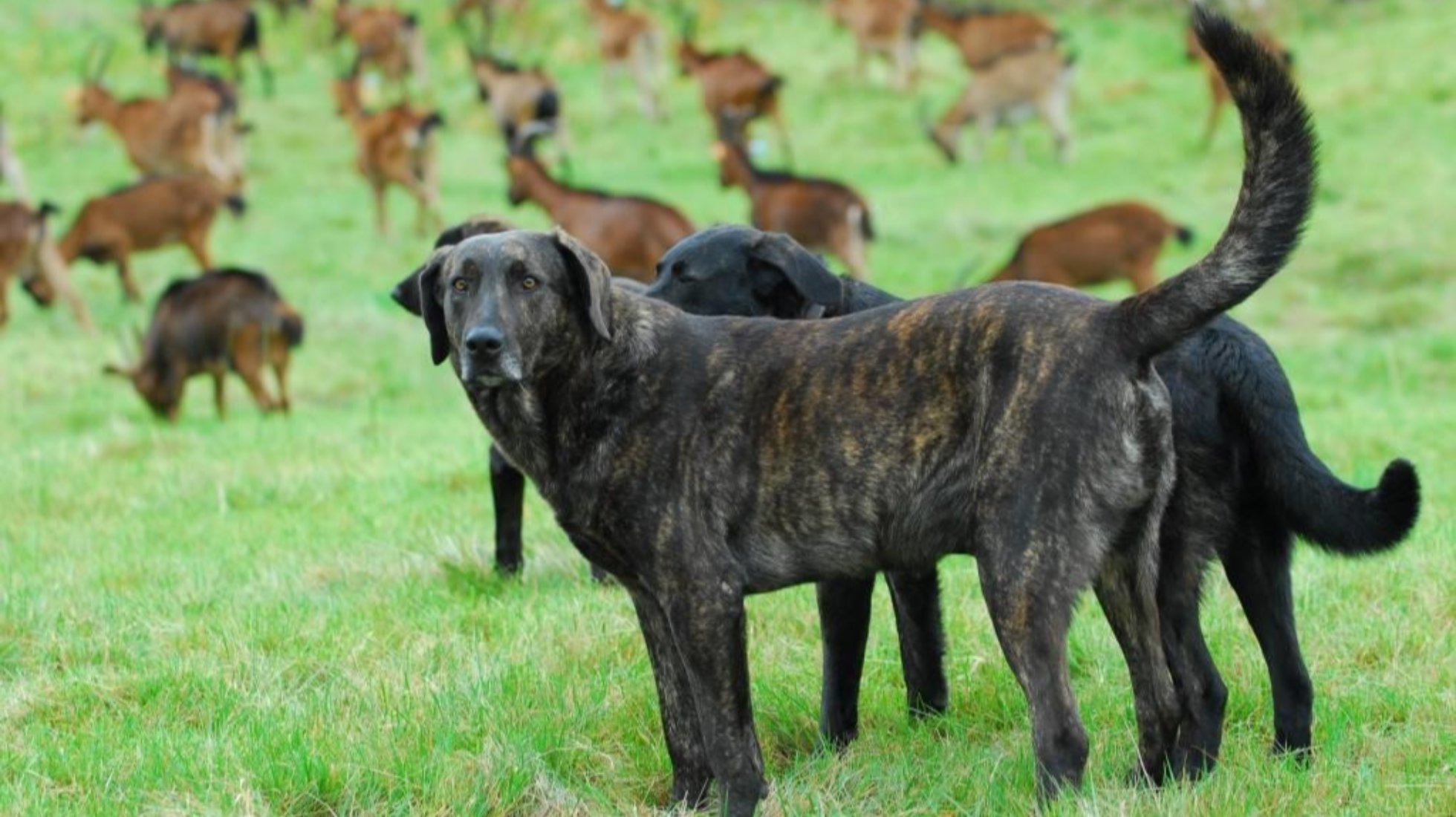
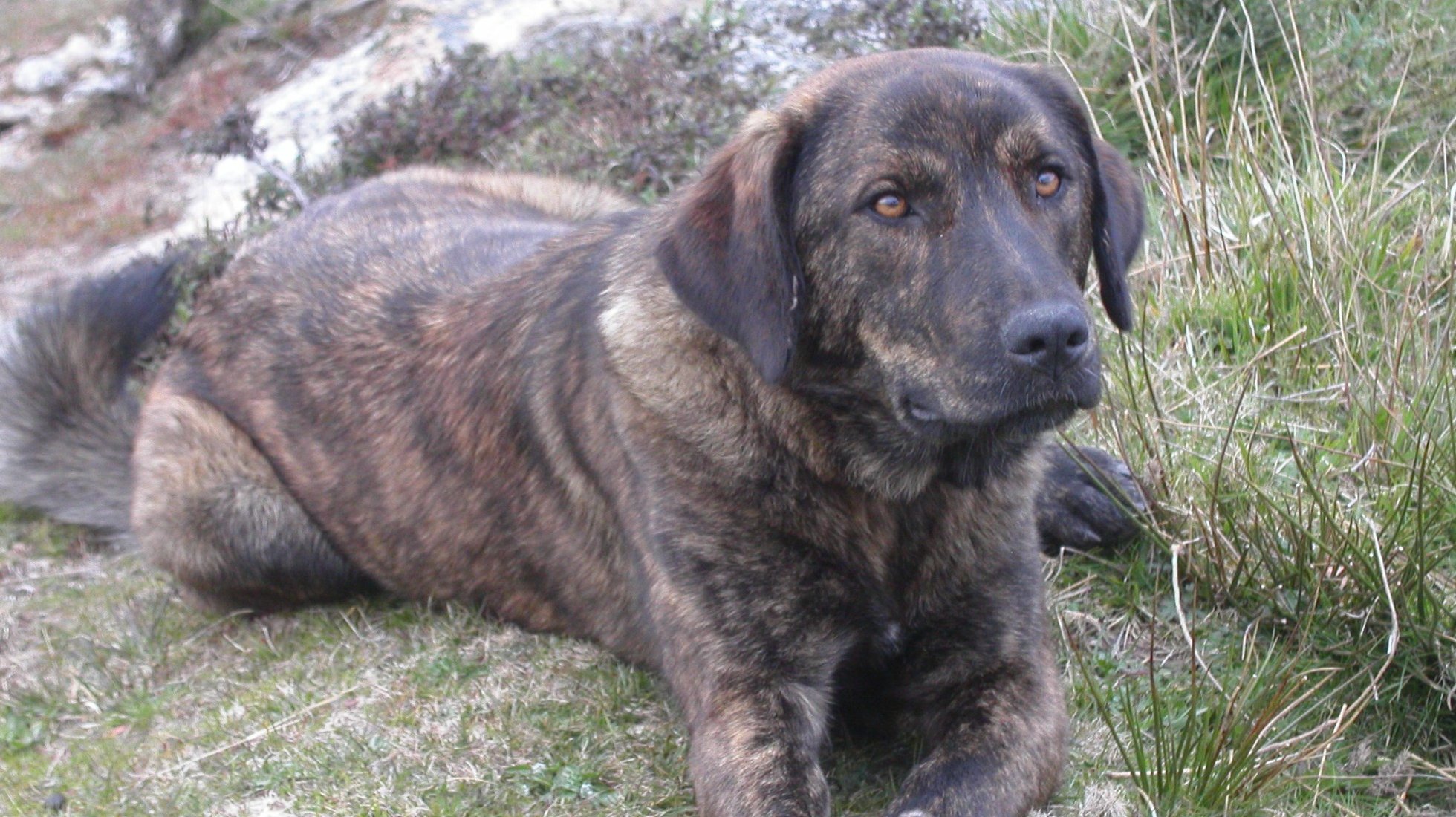
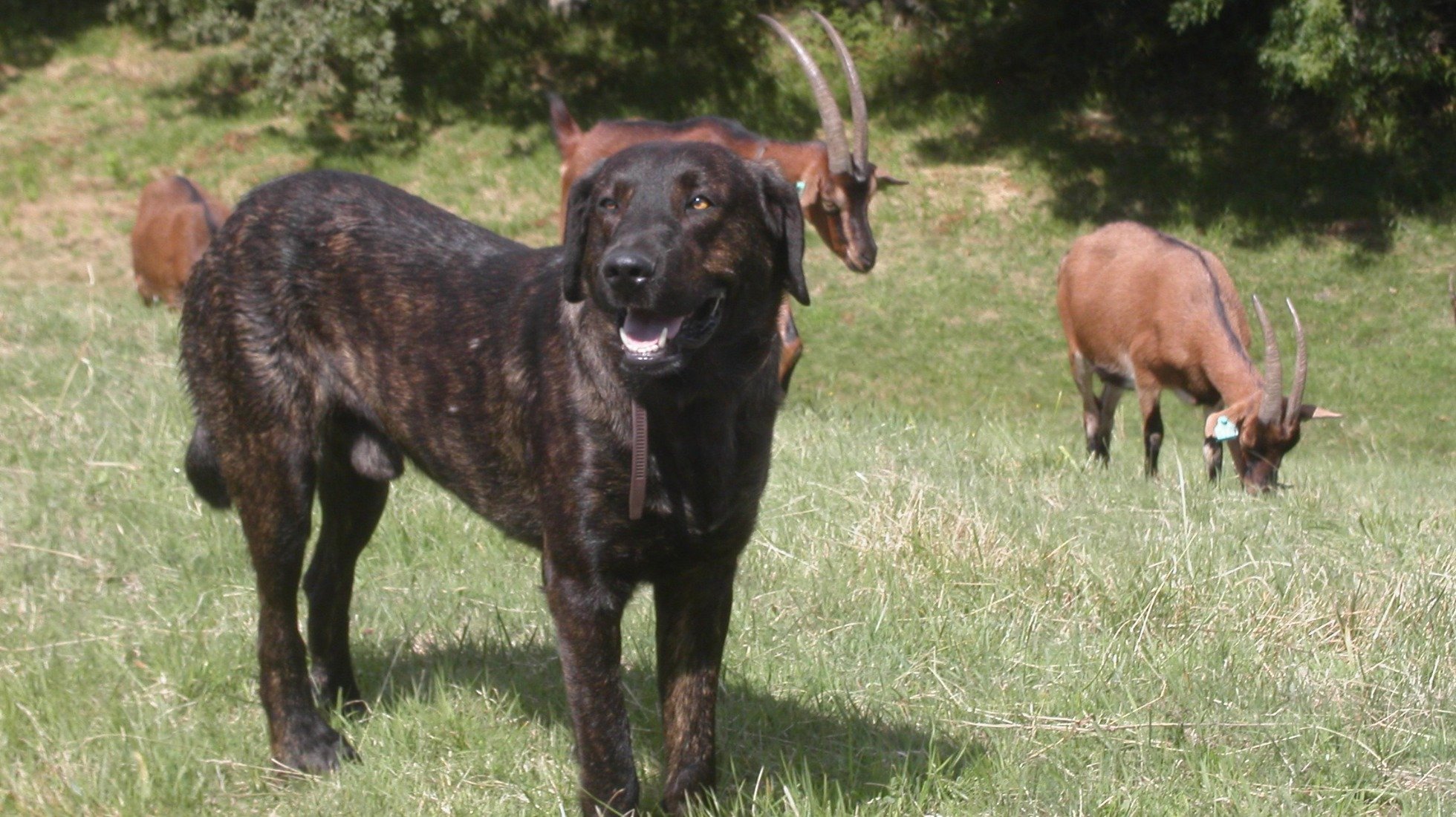
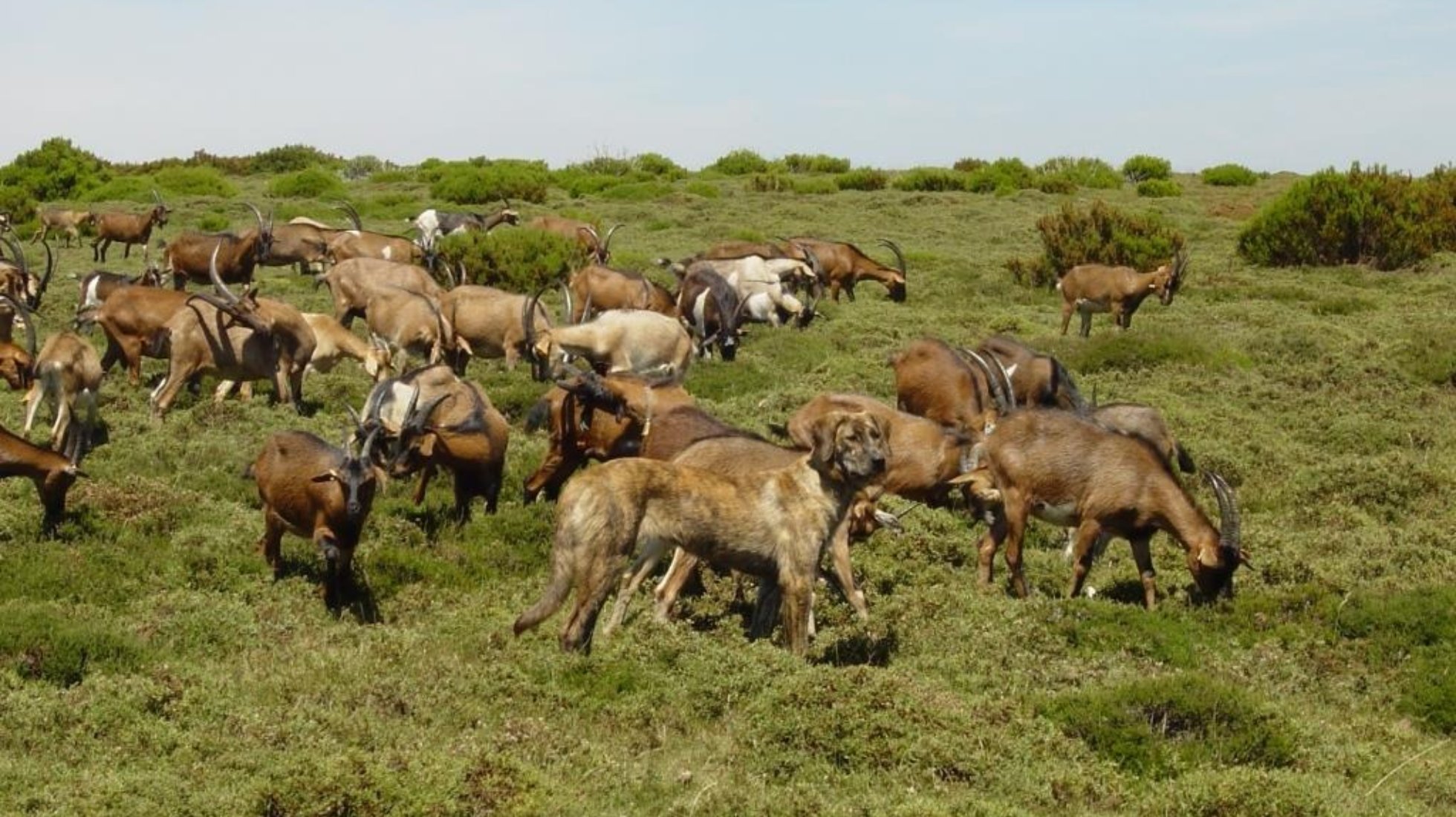
The Castro Laboreiro Dog originates from the Castro Laboreiro region, from which it takes its name, nestled between the Peneda and Soajo mountain ranges. It is considered a rare breed and is relatively little known. In its region of origin, it is increasingly less used due to the decline in livestock herds, although it continues to protect cattle herds. It is an active dog that is always alert and, due to its smaller size, demonstrates great agility.
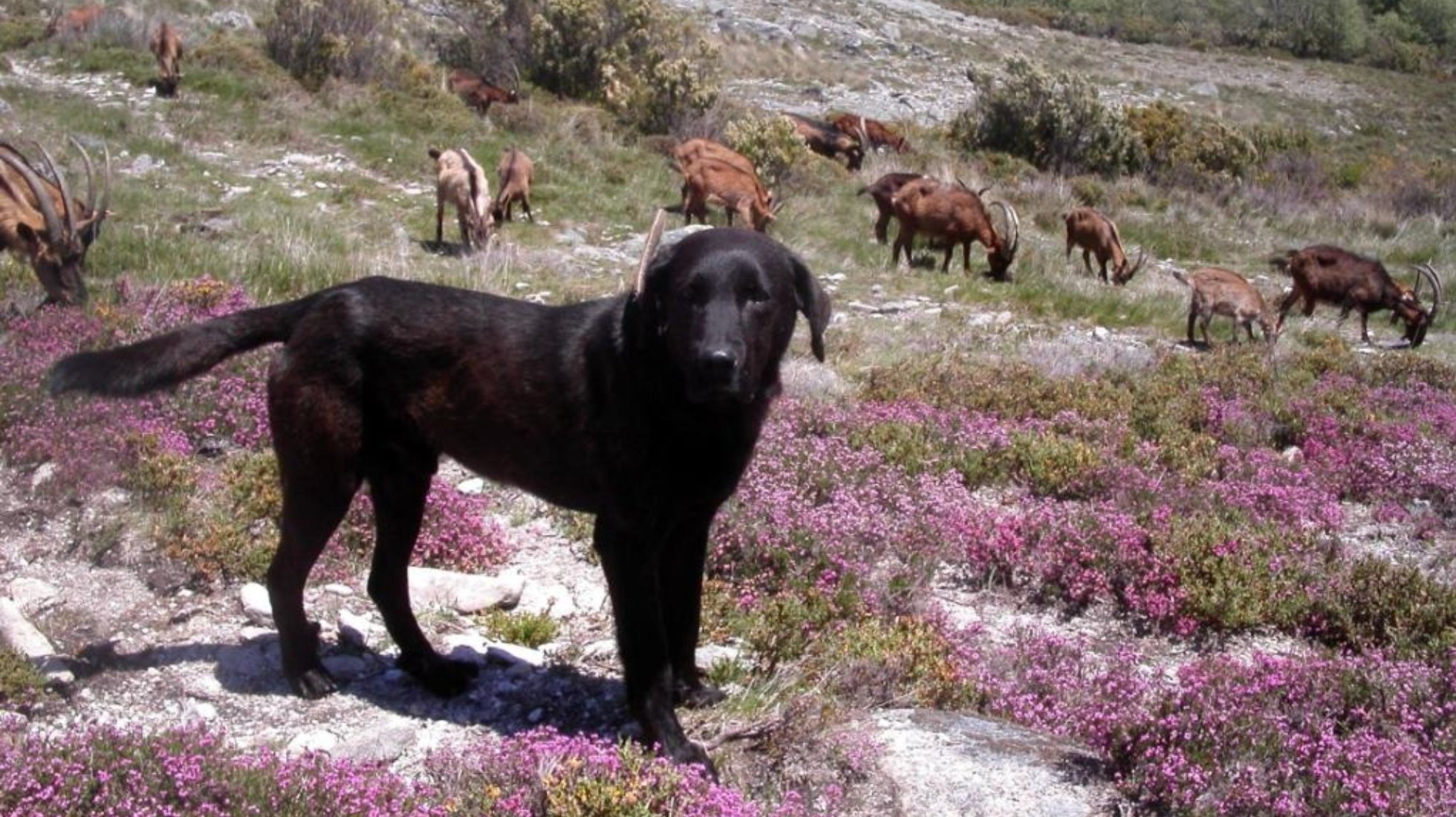
General appearance
Dog with a straight, lupoid profile, mastiff type.
Head
Long and approaching a straight shape.
Nasal stop
Slightly pronounced, with a greater distance from the vertex of the skull than from the tip of the snout.
Cranio-frontal region
Regularly developed and slightly prominent, frontal sulcus almost absent; profile approaching a straight line.
Occipital crest
Slightly pronounced.
Ears
Regular (12 cm long by 12 cm wide), not very thick and approximately triangular in shape, but rounded at the tip; drooping, set slightly above average, falling naturally and parallel to each other on either side of the head, as if flattened.
Tail
Entire, set higher than average; it descends to the hock when the animal is calm; when excited, the tail extends beyond the topline, in the shape of a scimitar.
Coat
Short fur predominates (approximately 5 cm); the wolf coat is common in its light, common and dark shades, with the latter being more frequently seen, and the "mountain color" being rare.
Height at the withers
55 to 60 cm for males and 52 to 57 cm for females.
Information taken from the Breed Standard, according to the Portuguese Kannel Club.
FCI Standard No. 170
The FCI ‑ Fédération Cynologique Internationale, is the entity that coordinates dog breeding internationally and centralizes the breed standards developed nationally by the central Canine Societies of each country.
Serra da Estrela Dog
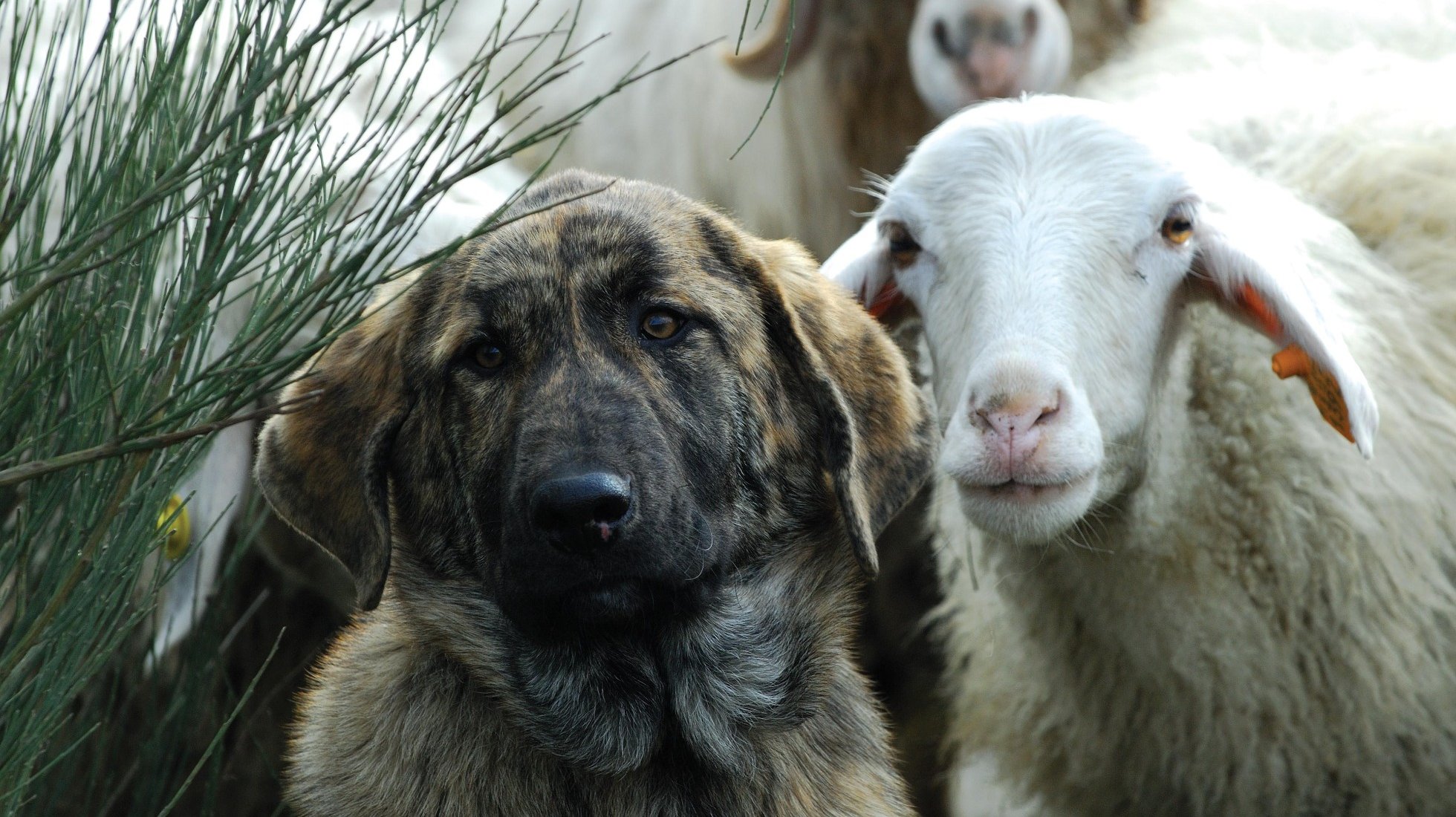
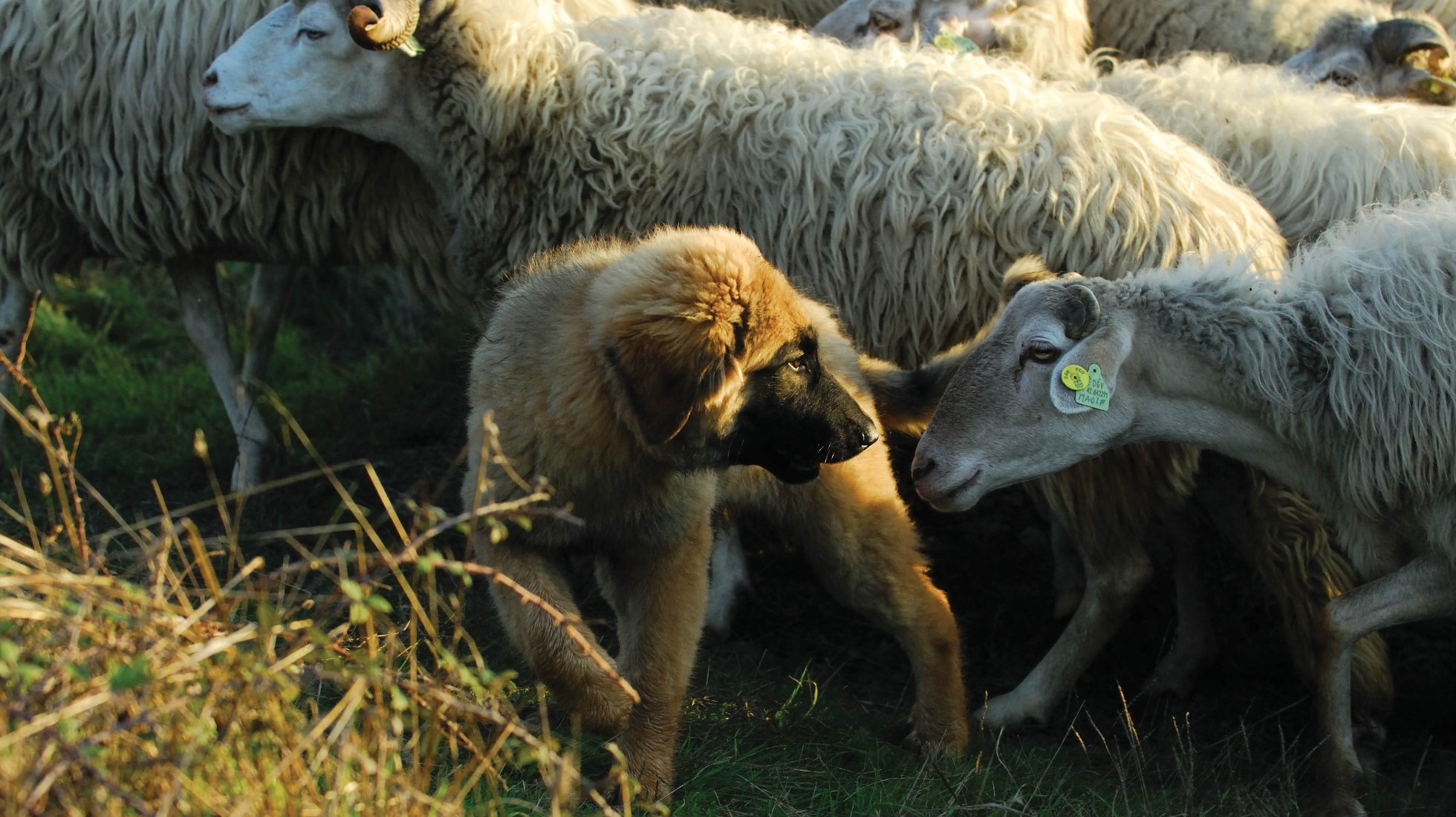
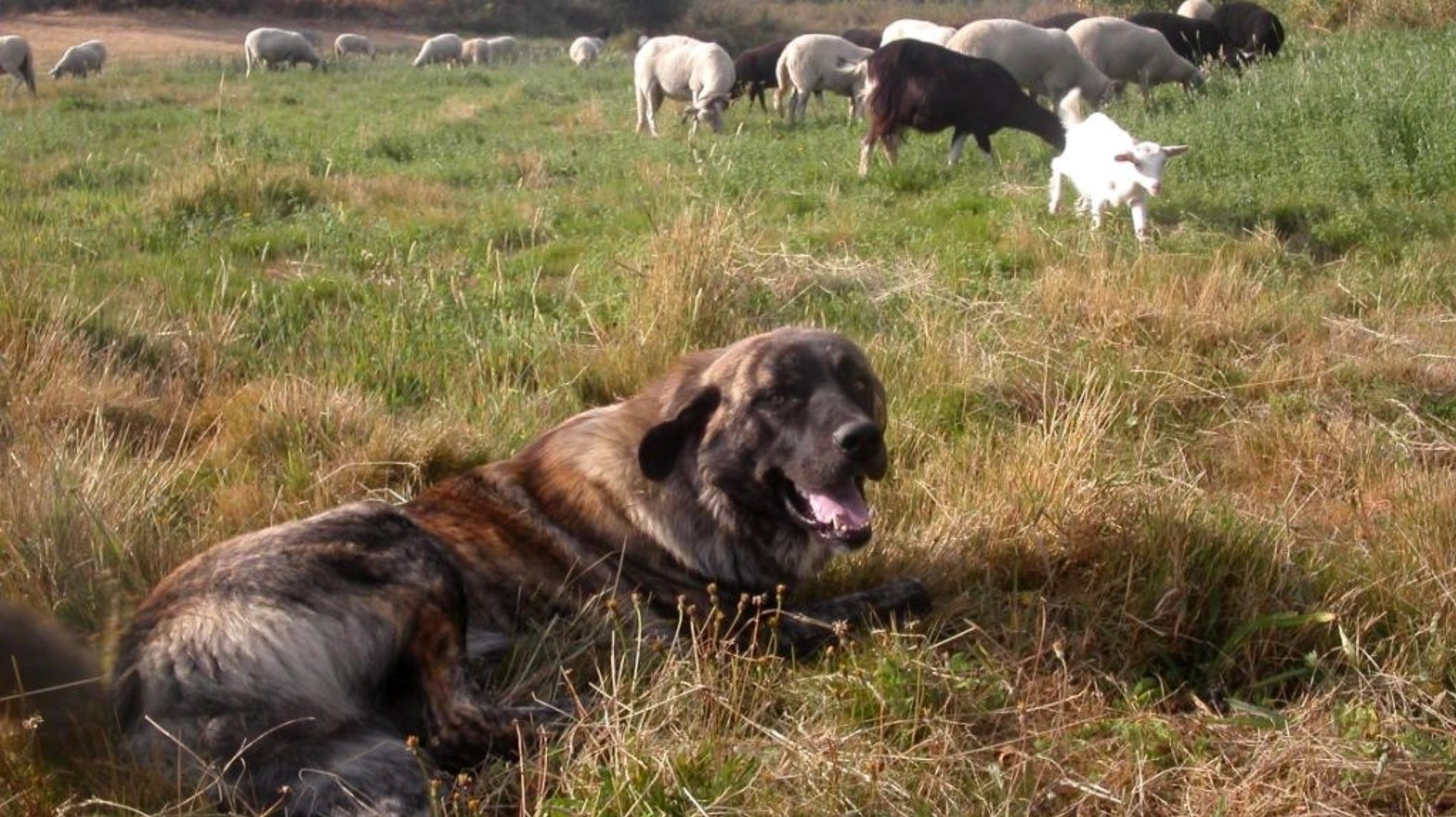
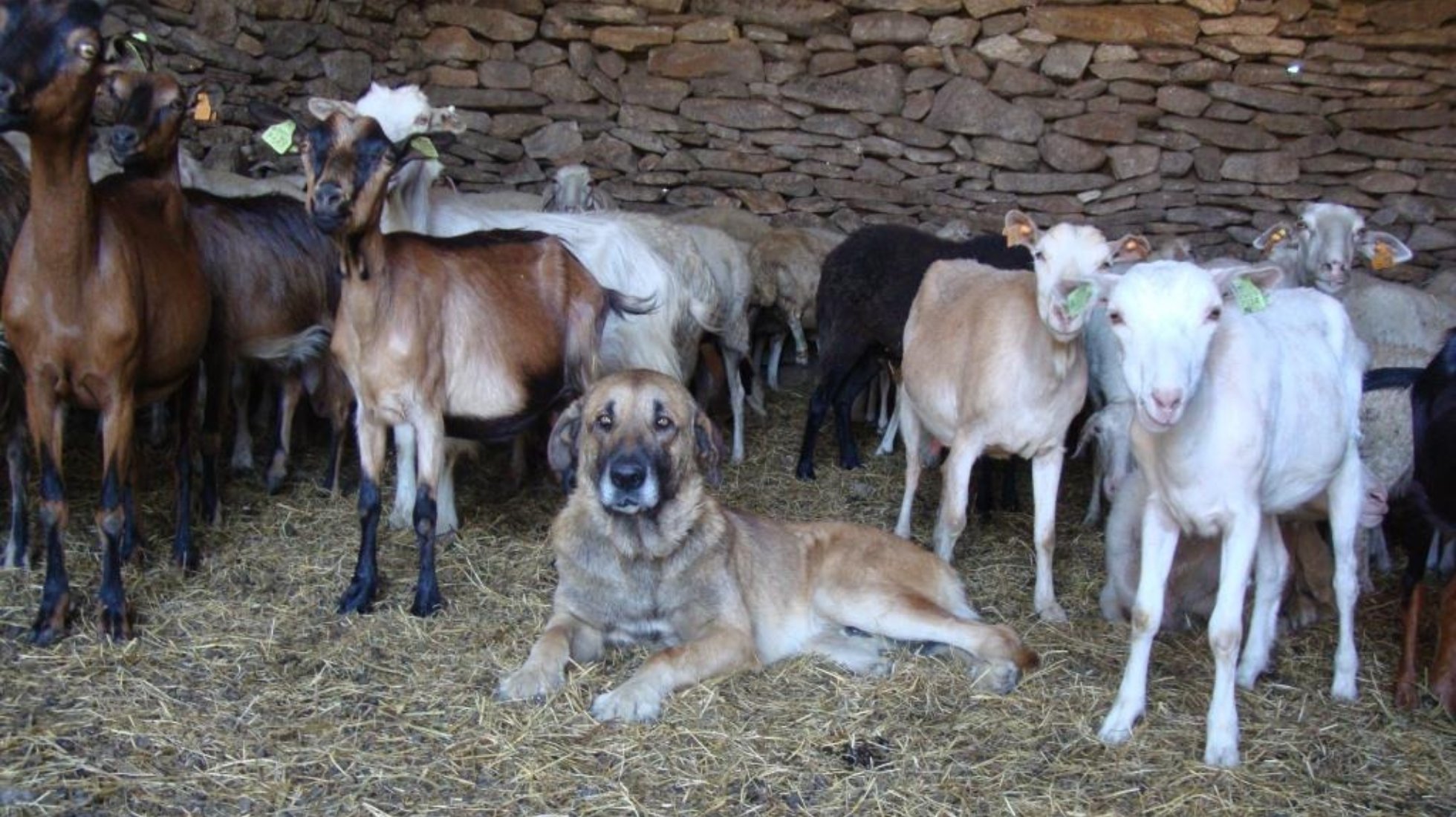
The Serra da Estrela Dog originates from the Serra da Estrela mountain range, where it protected flocks of sheep, which it accompanied during transhumance. Due to the great popularity of the long‑haired variety, it is the Portuguese breed with the highest number of registered animals. There is another short‑haired variety, rarer and less well‑known. Due to the significant decrease in the number of flocks in its region of origin, it is currently more commonly used for guarding farms and homes. It was also used as a draft animal.
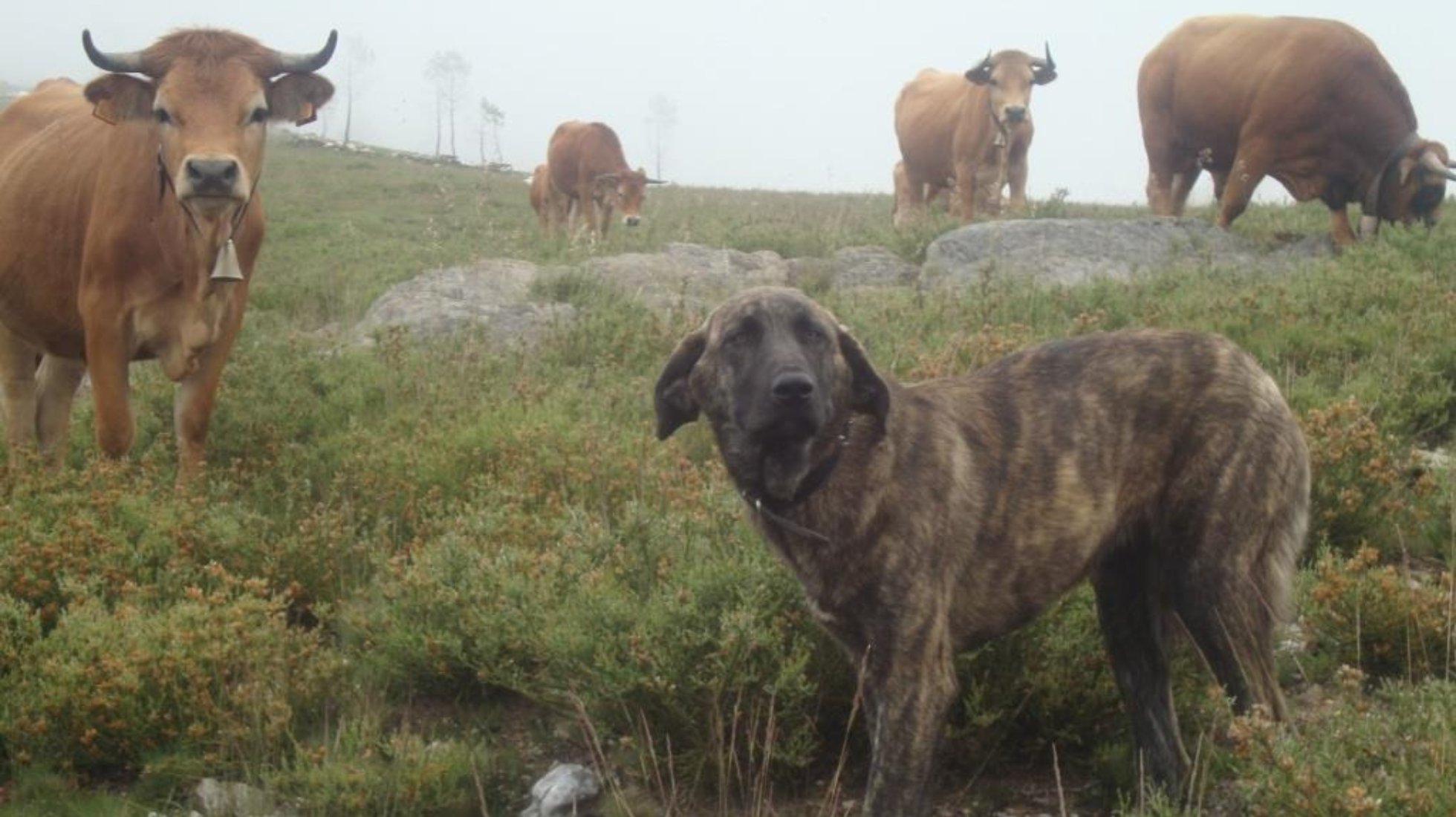
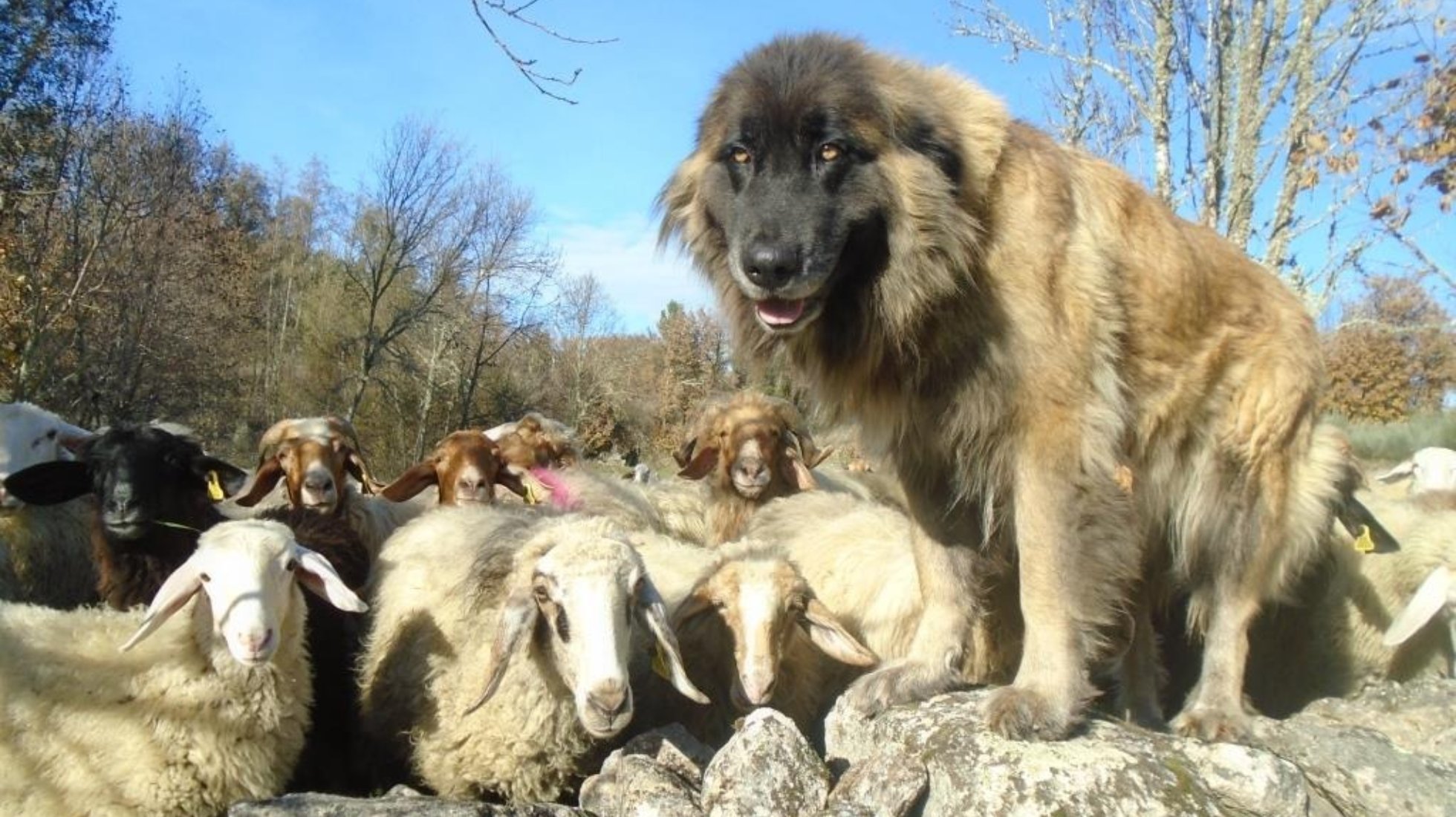
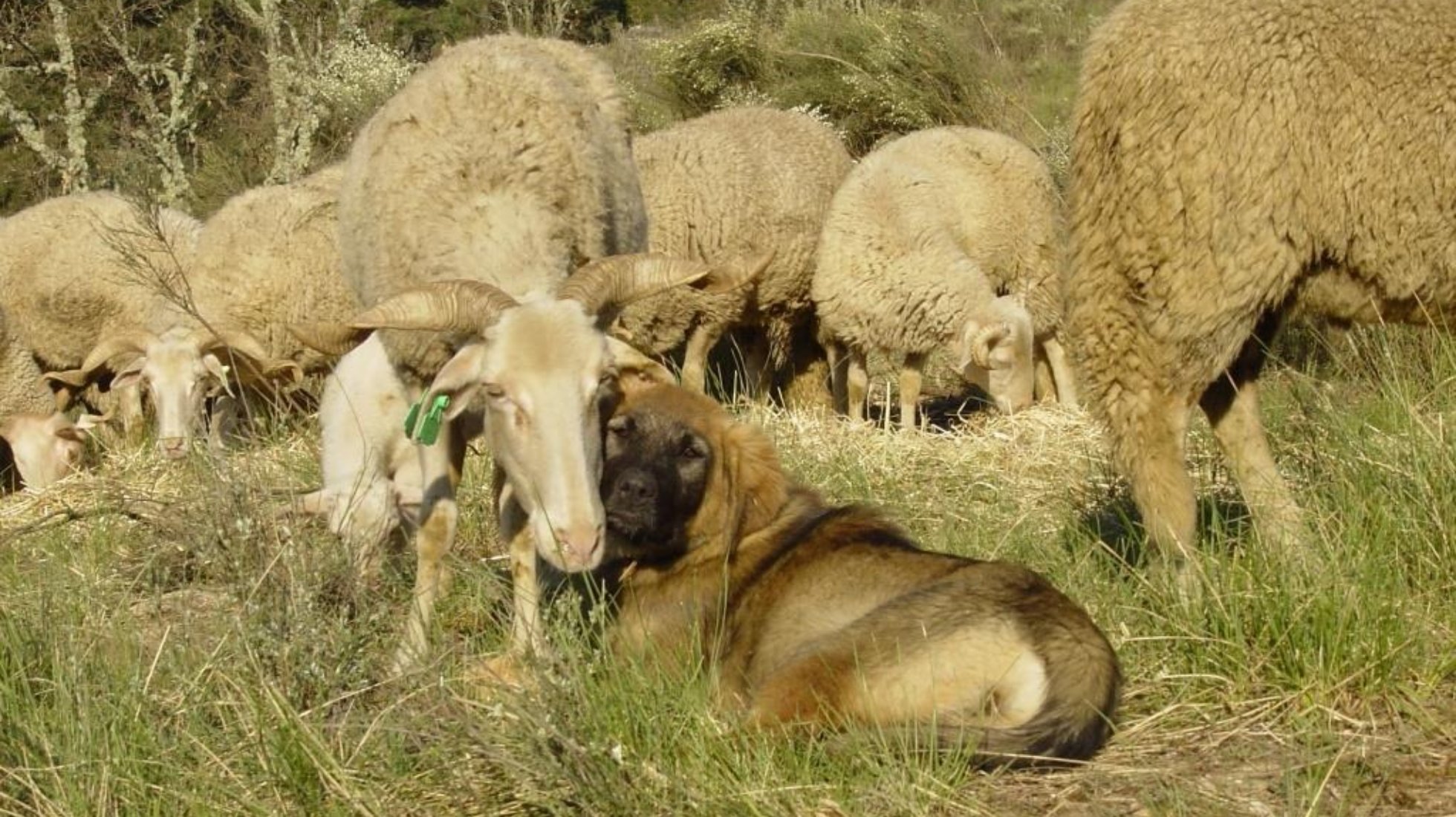
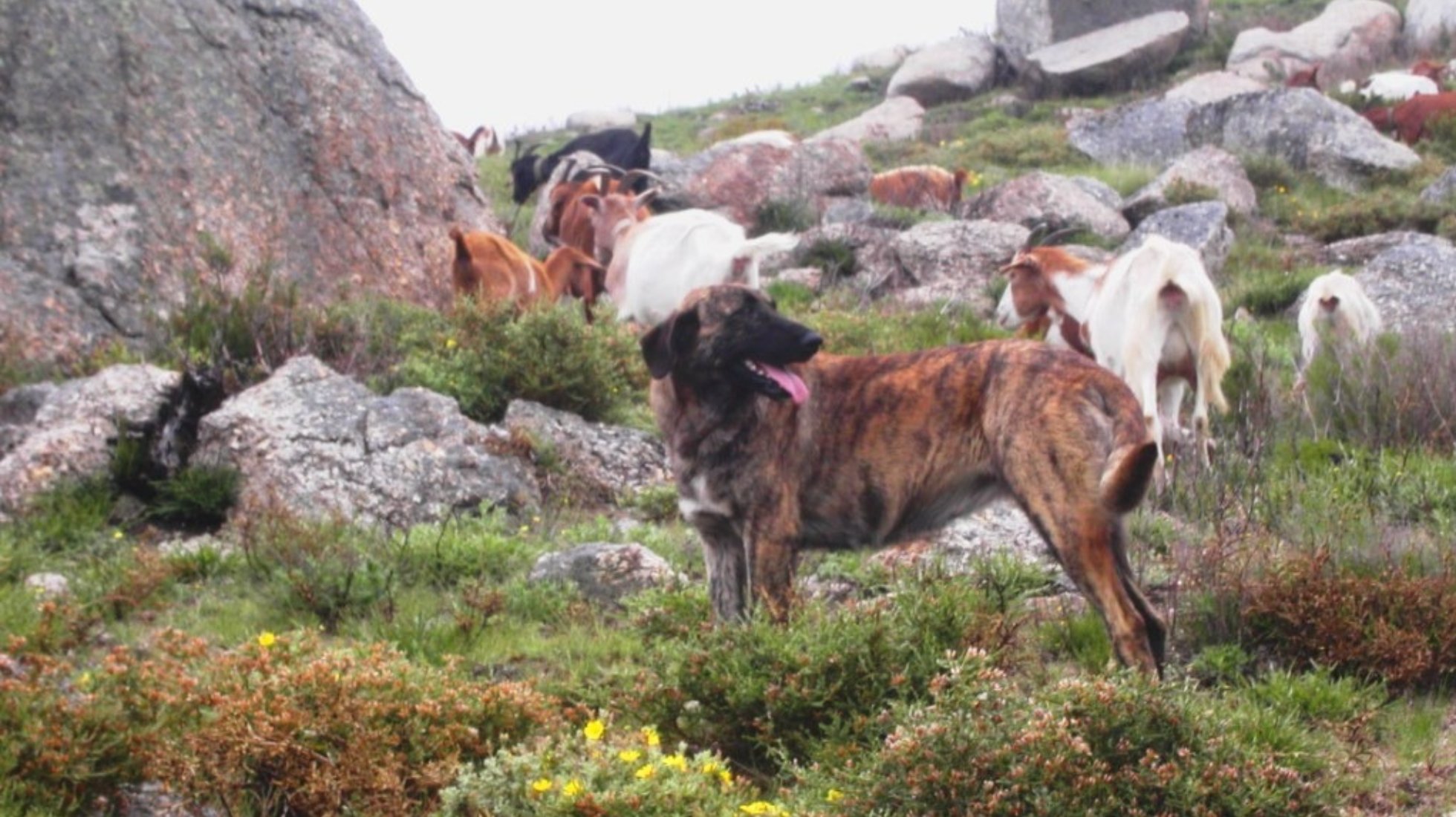
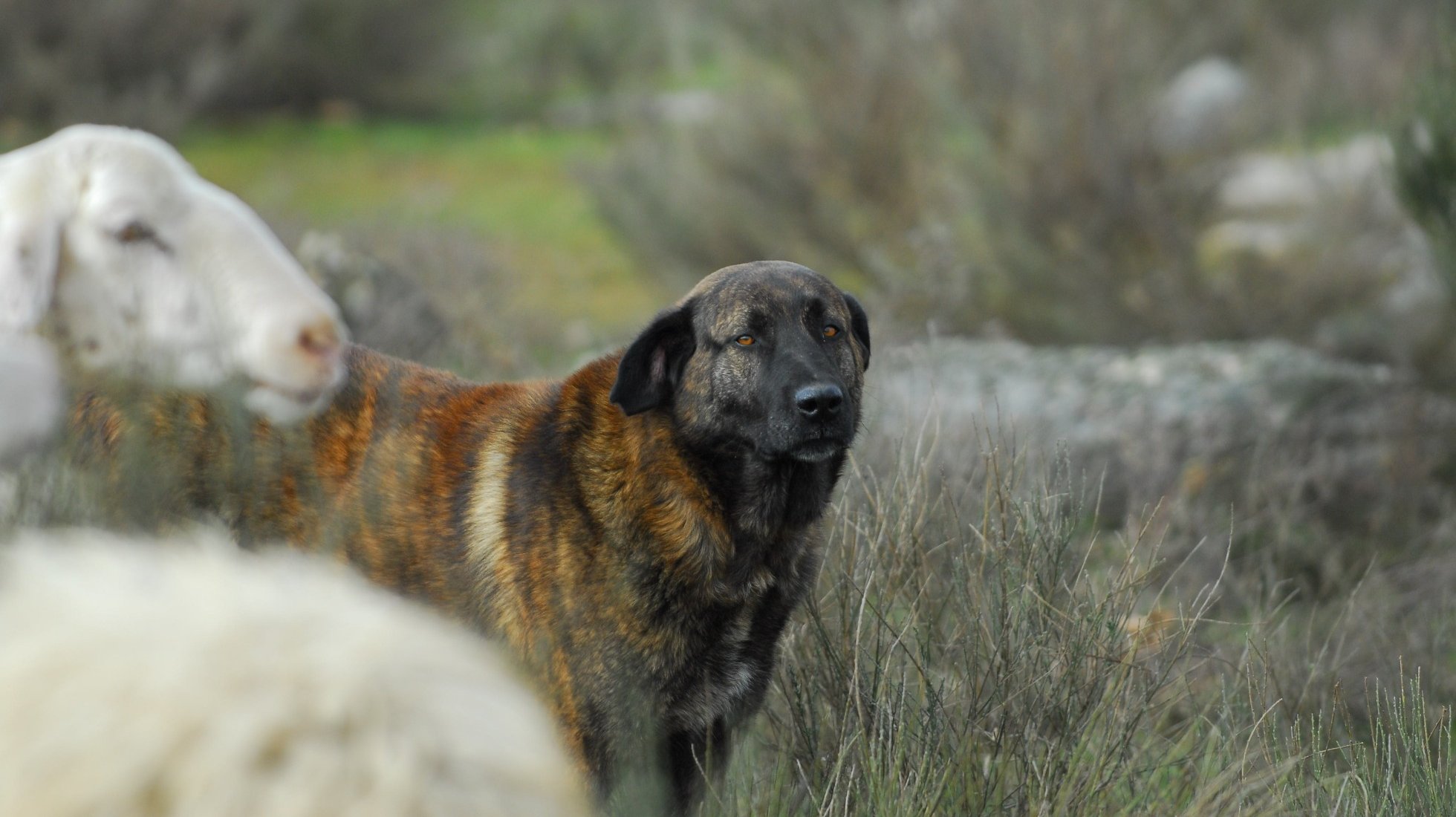
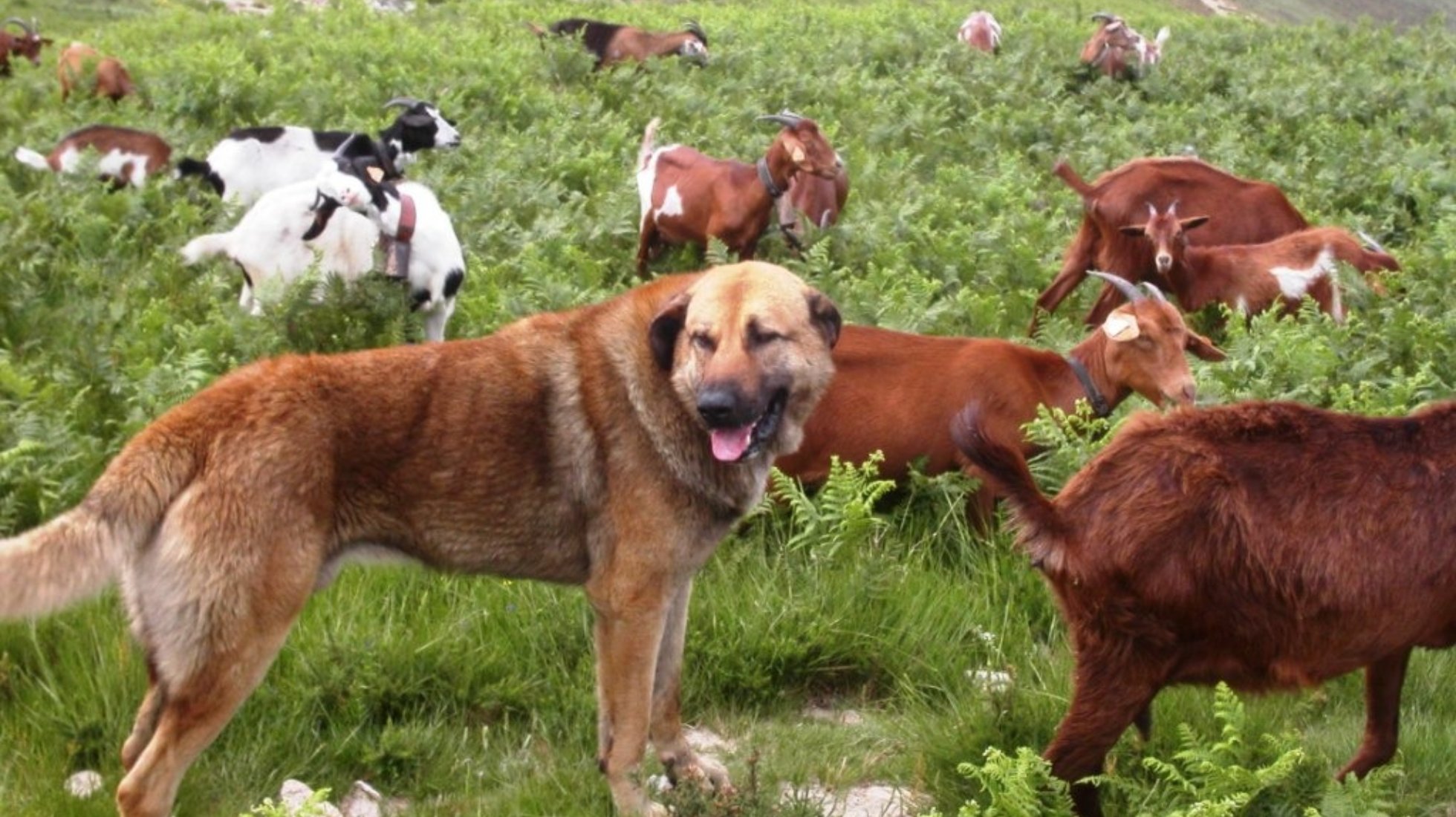
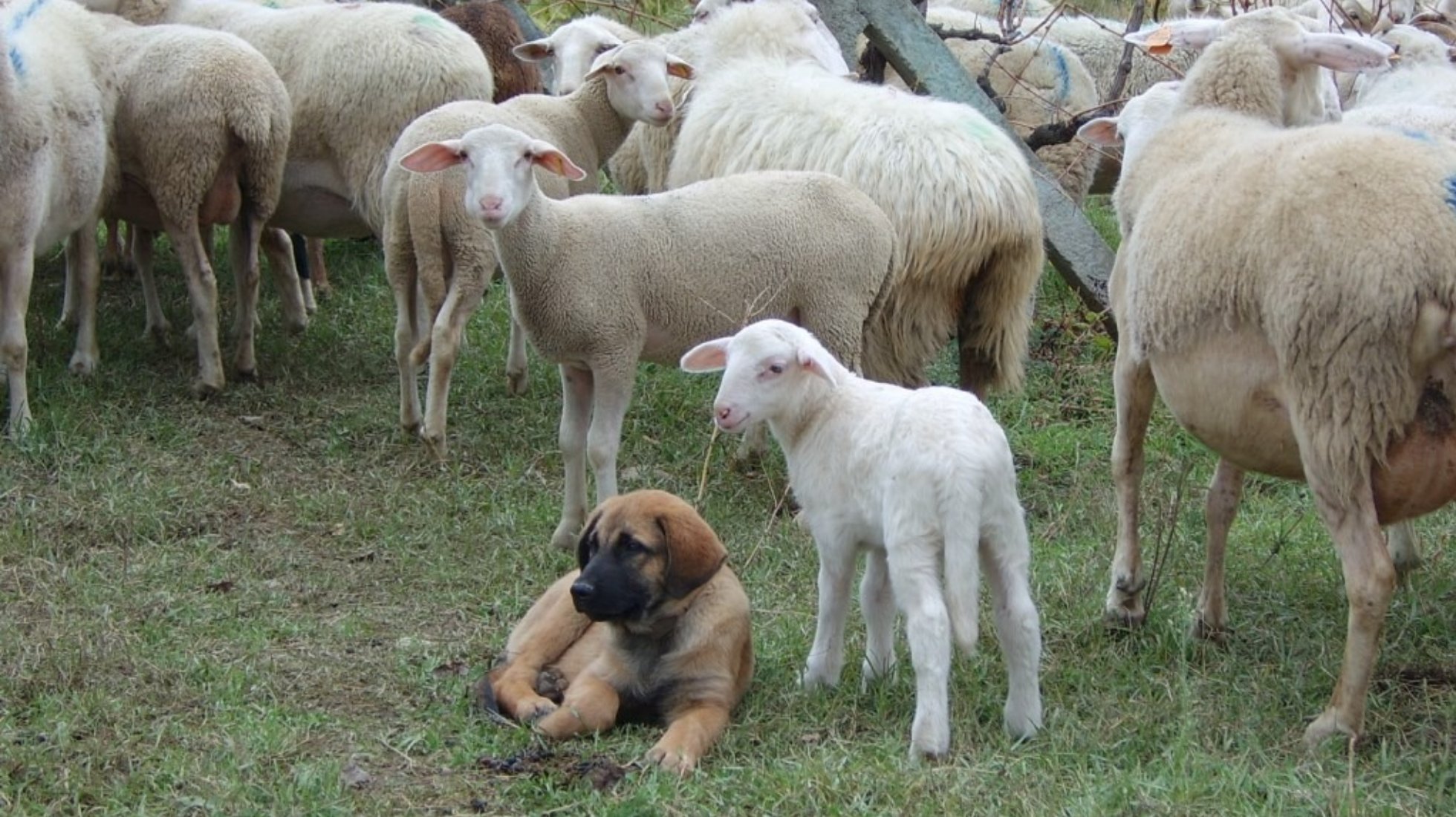
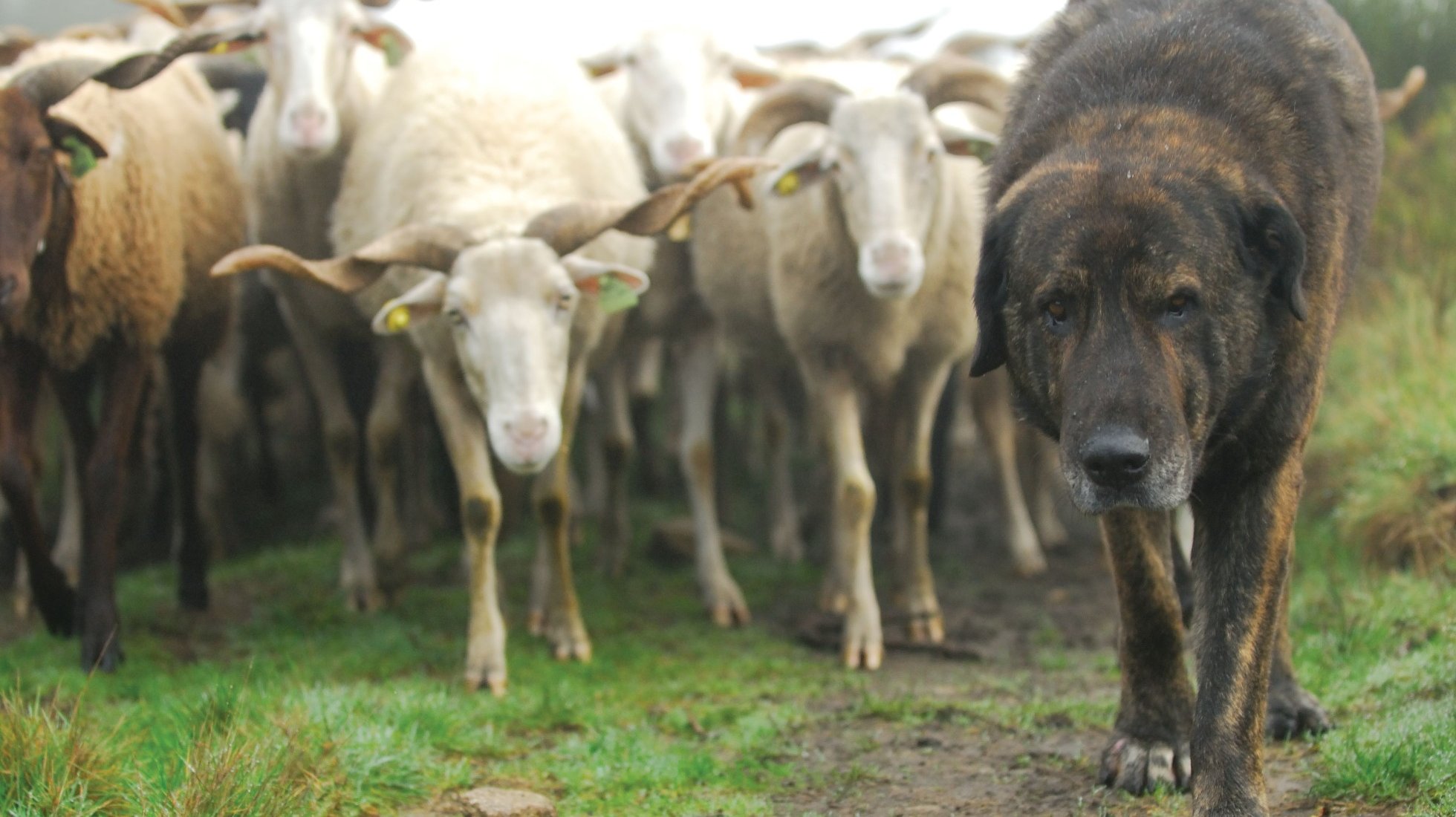
General appearance
Dog with a convex, molossoid profile, mastiff type.
Head
Strong, voluminous, with well-developed jaws; elongated and slightly convex; proportionate to the body, as well as the skull in relation to the face.
Nasal stop
Slightly pronounced and equidistant from the tip of the snout and the vertex of the skull.
Cranio-frontal region
Well developed, rounded, and with a convex profile.
Occipital crest
Absent.
Ears
Small in relation to the whole (11 cm long by 10 cm wide); slender, triangular, rounded at the tip; drooping; of medium insertion; inclined backwards; falling laterally, close to the head and revealing, at the base, a little of the inner surface.
Tail
Whole and thick, set on at a medium rate; carried low above the horizontal, reaching the point of the hock when the animal is calm; scimitar-shaped, forming a hook at the tip; when the animal is excited and in motion, the tail extends beyond the horizontal, curving over the back; fringed in long-haired dogs.
Coat
There are two varieties, short-haired and long-haired, with the latter currently being more common; only fawn, wolf-gray and yellow coats are accepted, either solid-colored or with white markings on the lower part of the muzzle, neck and chest, breast, hands and feet.
Height at the withers
68 to 75 cm for males and 62 to 68 cm for females.
Weight
Males 45 to 60 kg and females 35 to 45 kg.
Information taken from the Breed Standard, according to the Portuguese Kennel Club.
FCI Standard No. 173
The FCI ‑ Fédération Cynologique Internationale, is the entity that coordinates dog breeding internationally and centralizes the breed standards developed nationally by the central Canine Societies of each country.
Alentejo Mastiff
The Rafeiro do Alentejo breed originates from the vast plains of Alentejo. Traditionally, it accompanied and protected flocks of sheep on the long transhumance routes. With the end of transhumance and the disappearance of the wolf in the region, they began to be increasingly used to guard large estates and farms. It is a robust dog also used in packs for big game hunting.
General appearance
Stocky dog with a convex profile, molossoid, mastiff type.
Head
Resembles the head of a bear; wider at the top of the skull, narrower and more rounded at the base; proportionate to the build.
Nasal stop
Blurred; the upper longitudinal craniofacial axes are divergent.
Cranio-frontal region
Well developed, rounded, and with a convex profile.
Occipital crest
Absent.
Ears
Small to medium; triangular; hanging to the side; of medium insertion; folded at the tip.
Tail
Whole and thick, set on at a medium angle; curved, turned at the tip, but not broken; when at rest it falls below the hocks; when in action it may curl above the back.
Coat
Short or medium-length hair; black, wolf-gray, fawn, and yellow coats are accepted, either solid-colored or with white markings, or white mottled with those colors.
Height at the withers
66 to 74 cm for males and 64 to 70 cm for females.
Weight
Males 40 to 50 kg and females 35 to 45 kg.
Information taken from the Breed Standard, according to the Portuguese Kennel Club.
FCI Standard No. 96
The FCI ‑ Fédération Cynologique Internationale, is the entity that coordinates dog breeding internationally and centralizes the breed standards developed nationally by the central Canine Societies of each country.
Transmontano Cattle Dog
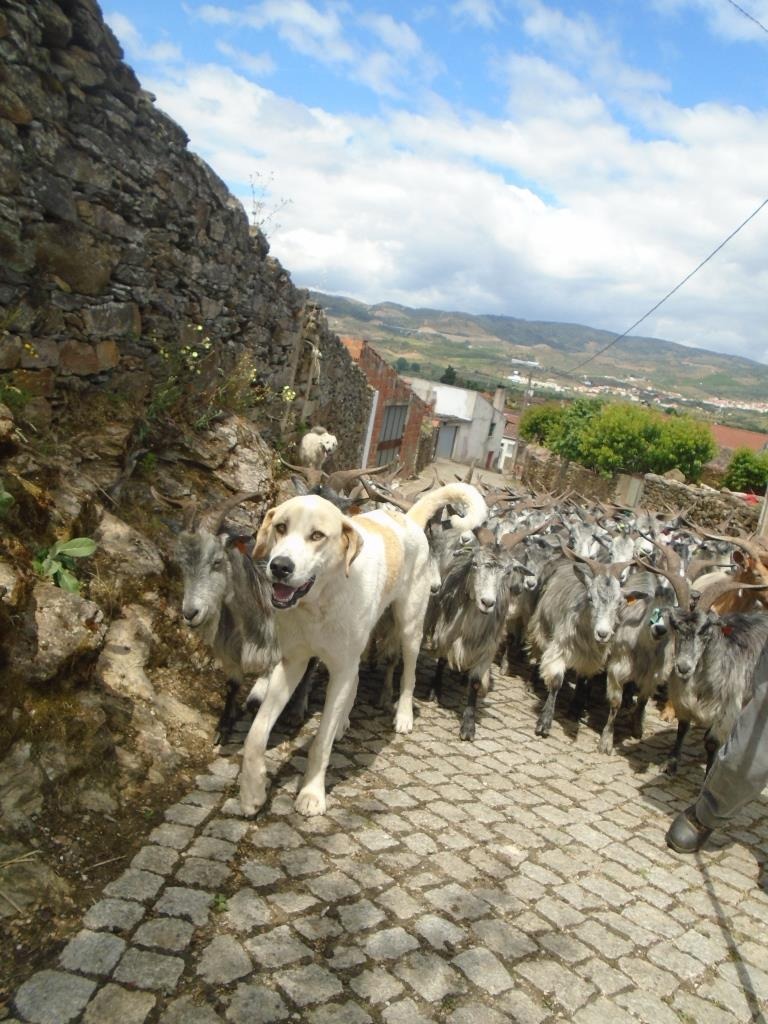
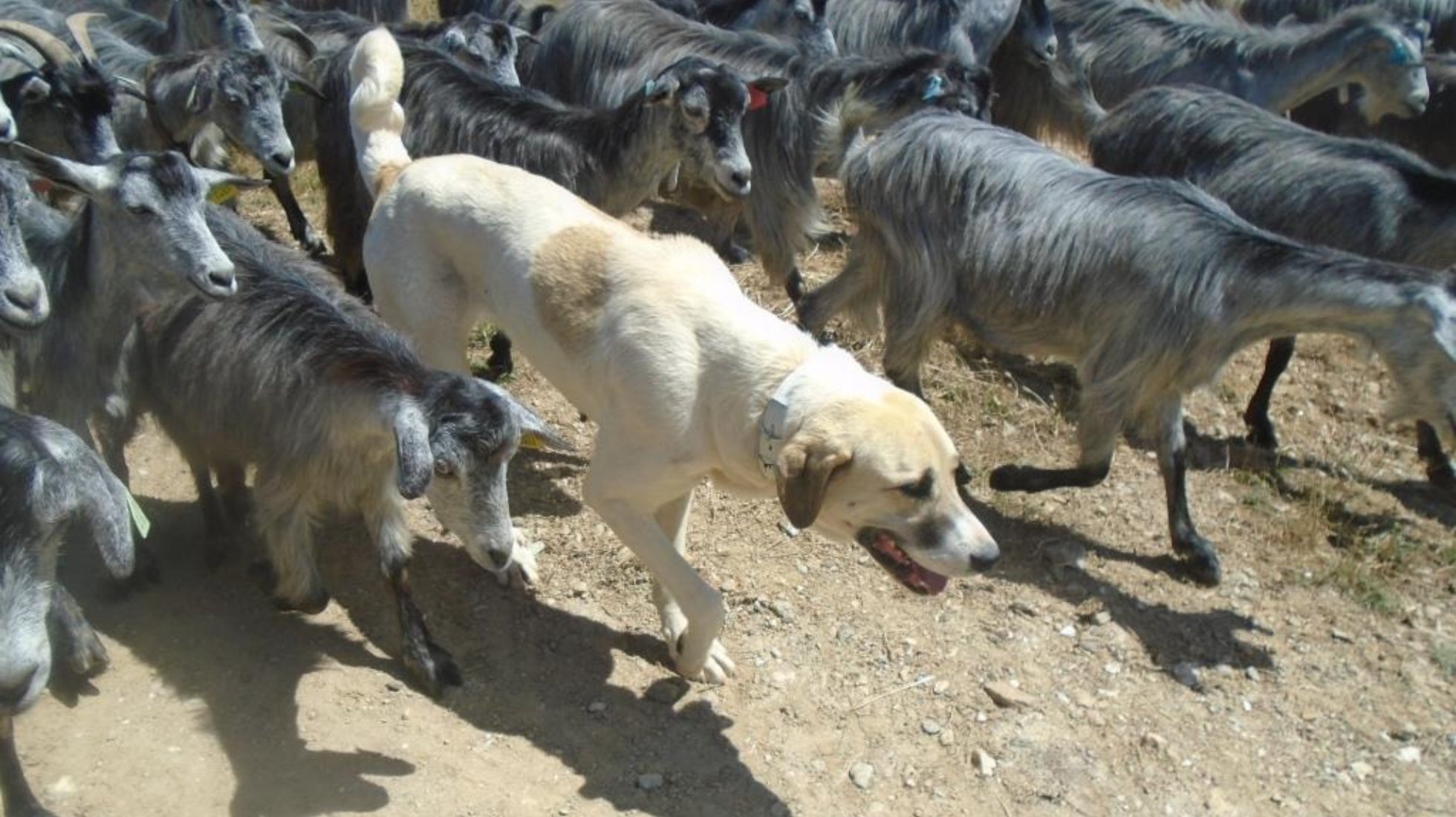
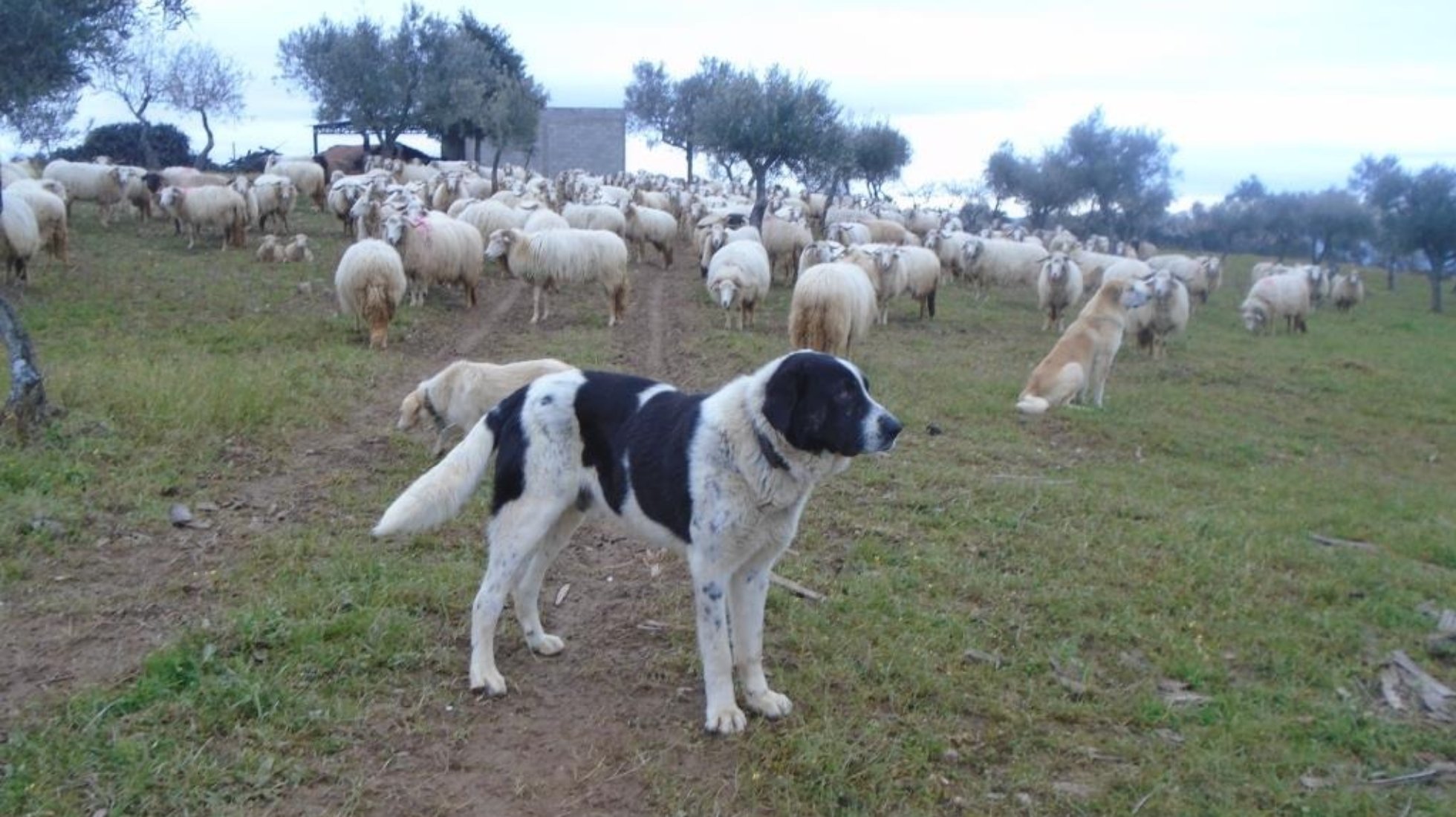
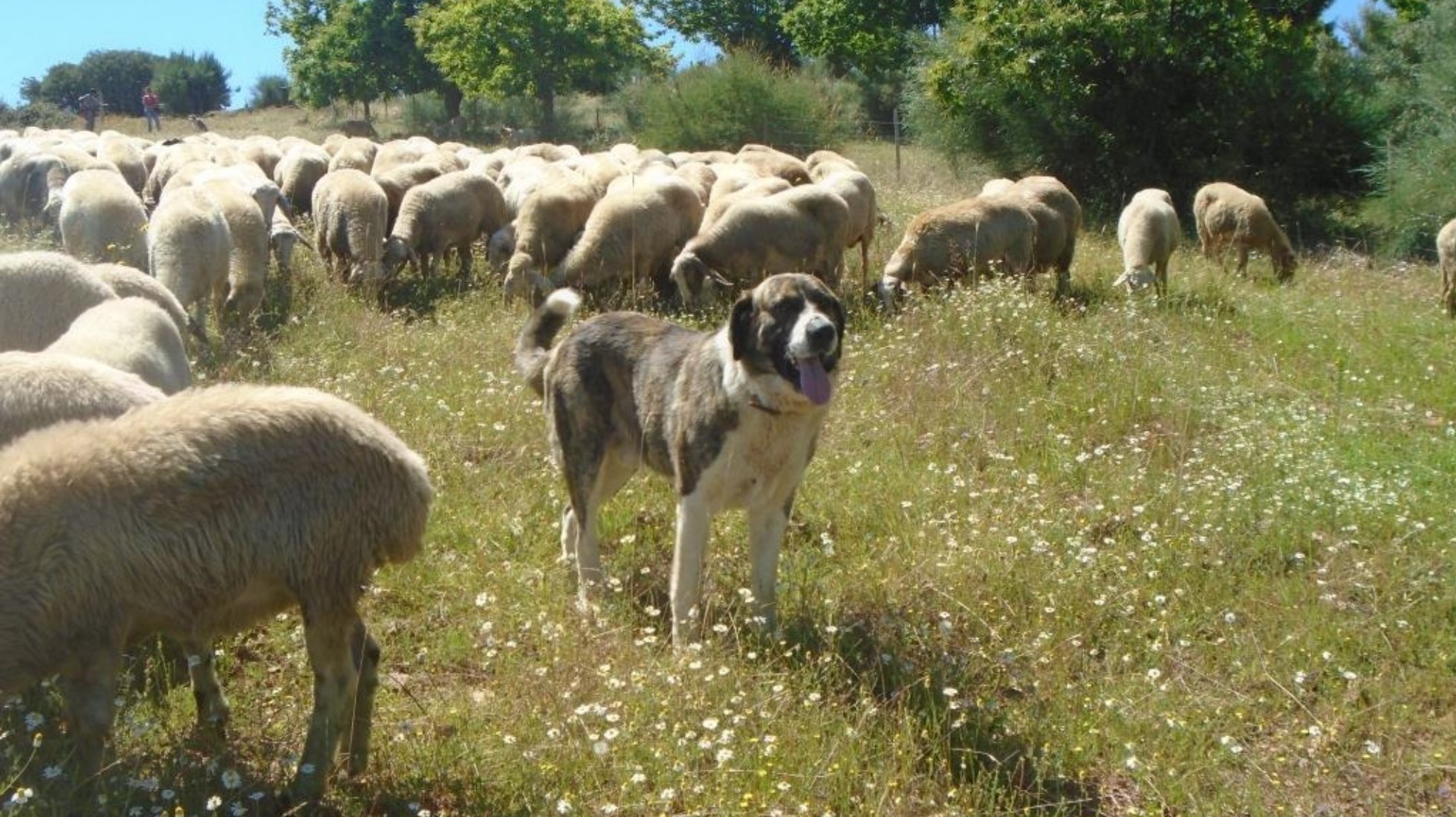
The Transmontano Cattle Dog originates from the Northeast of Trás‑os‑Montes, a plateau region crossed by valleys and mountains. It is still widely used for protecting livestock, especially sheep. It is a very recent breed; the first records were made in 2004, and the standard was definitively recognized in 2012. It is the largest national dog breed.
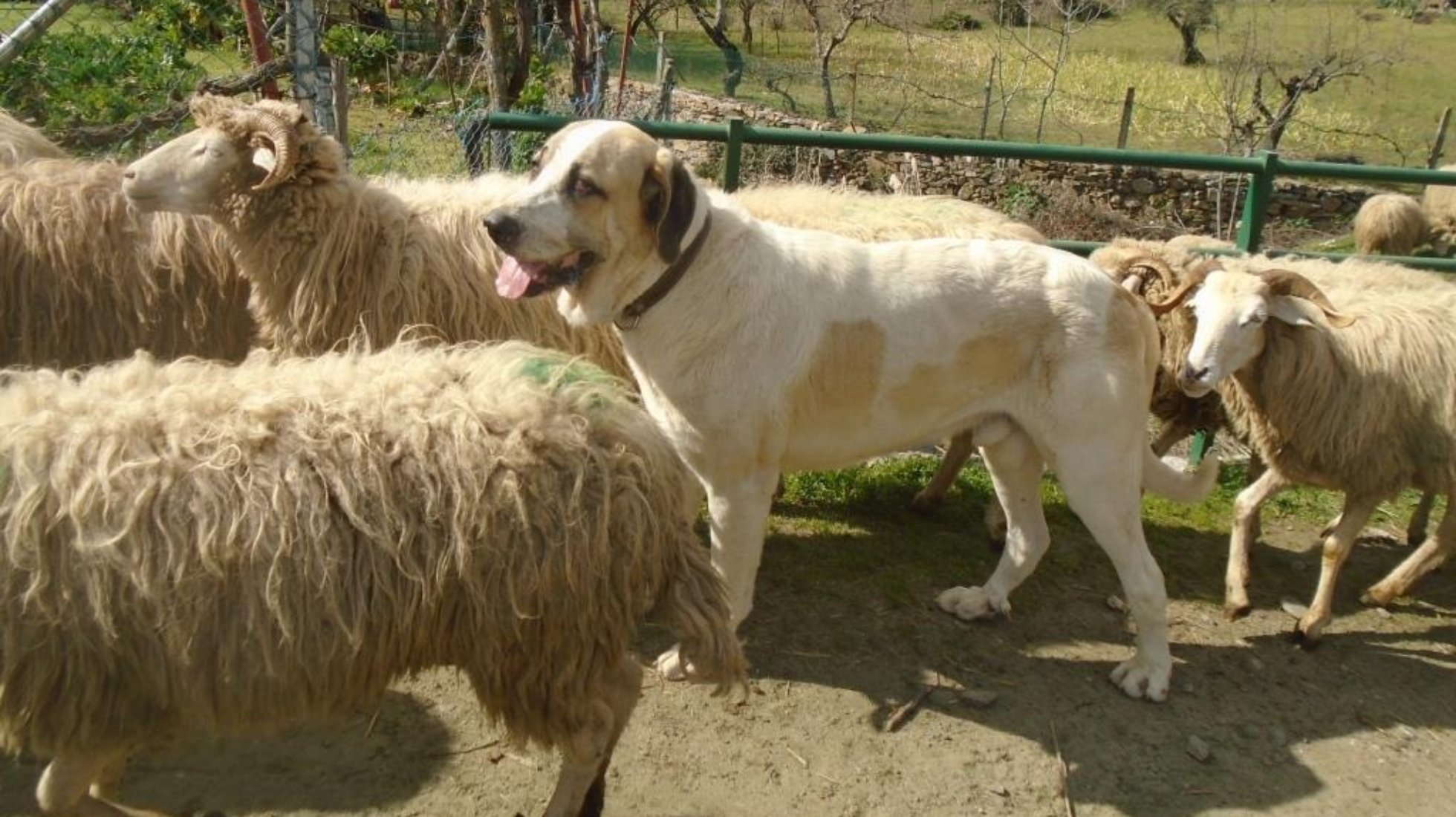
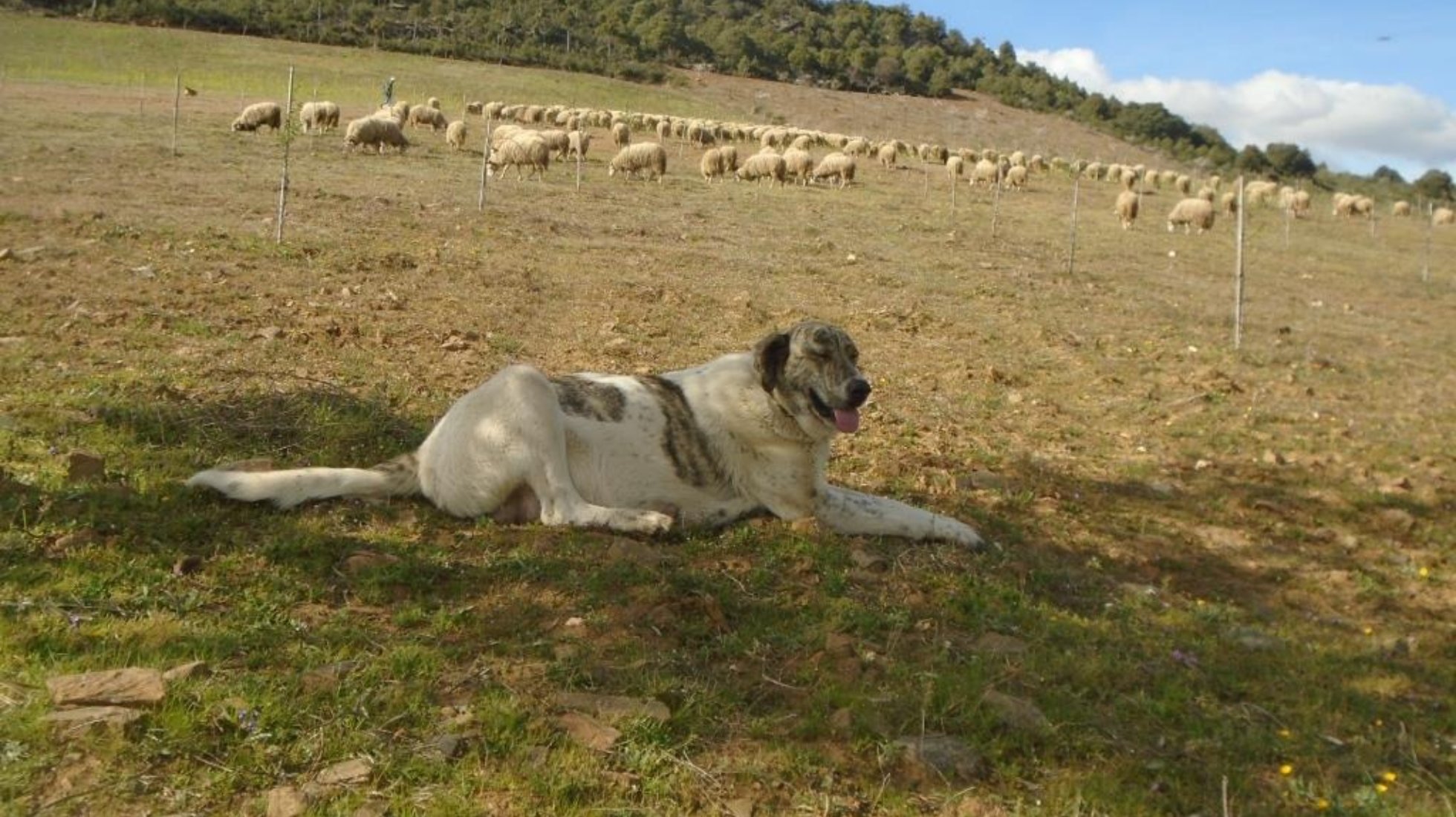
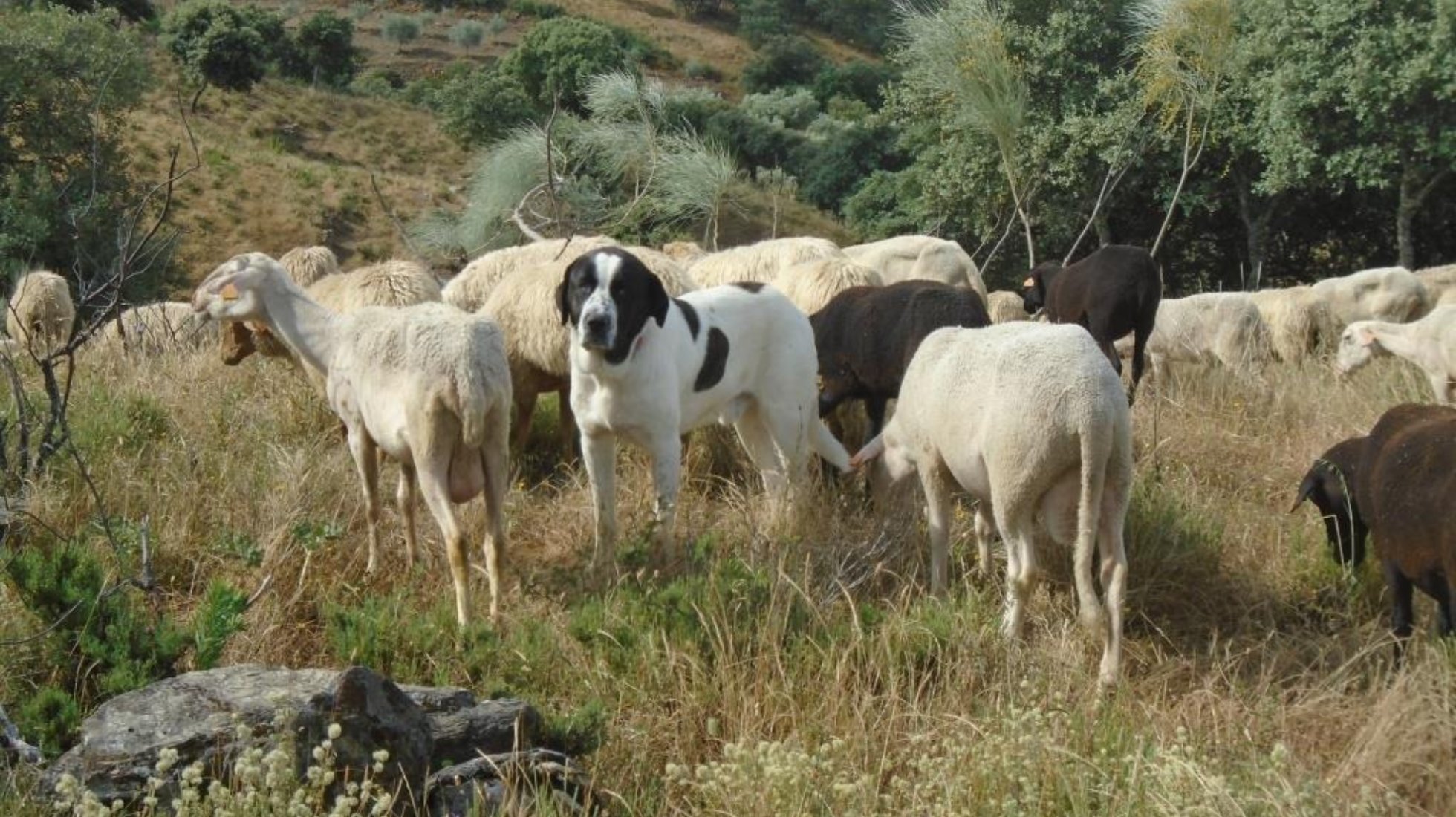
General appearance
A large, strong, and robust molosser dog, distinguished by its imposing appearance, proud bearing, and serene gaze. It has a square lateral profile, with long, strongly boned, naturally straight and well-proportioned limbs, a slightly tucked-up belly, and moderate rear angulations.
Head
Large and massive, but not excessively voluminous in proportion to the body size, with a convex profile and parallel craniofacial axes, although slight divergence is tolerated.
Skull
Moderately wide and slightly convex in its axes. Apparent supraorbital ridges.
Stop
Moderate nasofrontal depression.
Ears
They are medium-sized, quite fleshy, slightly longer than wide, triangular, with a rounded pointed tip and set medium-high (above the eye line). They have mobility in their posture, the most common being the drooping one, and may pull slightly and fold vertically. When alert, they stand up and fold forward.
Tail
Whole and thick, well covered with fur, of medium insertion and length, not extending beyond the hock. It falls in a saber shape, but may have a curve at the tip; in movement, the tail is carried high, in a sickle shape, and may even curl at its tip.
Coat
Thick, medium-length, smooth, and very dense fur; the most common coat colors are white with black, yellow, fawn, or wolf-gray markings. Solid colors are fawn, yellow, or wolf-gray, and may also be striped.
Height at the withers
75 to 85 cm for males and 68 to 78 cm for females.
Weight
Males 60 to 75 kg and females 50 to 60 kg.
Information taken from the Breed Standard, according to the Portuguese Kennel Club.
FCI Standard No. 368
The FCI ‑ Fédération Cynologique Internationale, is the entity that coordinates dog breeding internationally and centralizes the breed standards developed nationally by the central Canine Societies of each country.
Foreign breeds
There are different breeds of livestock dogs in various Mediterranean and Asian countries, among which we can highlight a few.
- Spain
Spanish Mastiff (Mastín Español)
Pyrenean Mastiff (Mastín de los Pirineos)
- France
Pyrenean Mountain Dog (Chien de Montagne des Pirénées)
- Italy
Maremmano‑Abruzzese Shepherd Dog (Cane da Pastore Maremmano‑Abruzzese)
- Slovenia
Kraski Shepherd Dog (Kraski Ovcar)
- Hungary
Komondor
Kuvasz
- Slovakia
Slovensky Cuvac
- Poland
Polish Shepherd Dog Tatra (Polski Owczarek Podhalanski)
- Macedonia, Serbia and Montenegro
Yugoslav Shepherd Dog (Sarplaninac)
- Russia
Central Asian Shepherd Dog (Sredneasiatskaïa Ovtcharka)
Caucasian Shepherd Dog (Kavkazskaïa Ovtcharka)
Southern Russian Shepherd Dog (Ioujnorousskaïa Ovtcharka)
- Turkey
Anatolian Shepherd Dog (Coban Köpegi)
Akbash (breed not recognized by the FCI)
- Tibet
Tibetan Mastiff (Do‑Khyi)
- Morocco
Atlas Shepherd Dog (Aidi)